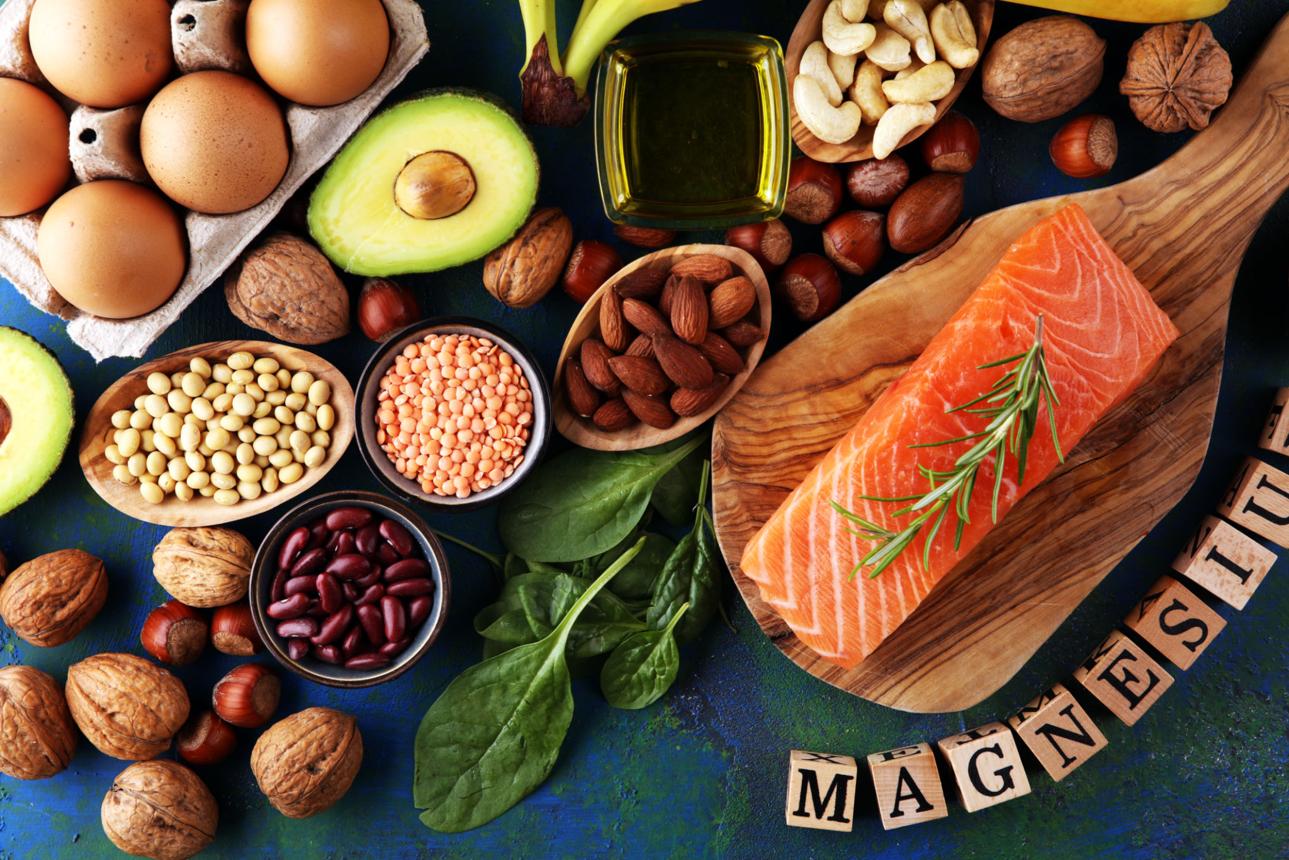
About Magnesium
Magnesium is an essential mineral involved in over 300 biochemical reactions in the body.
It helps regulate muscle contractions, nerve signals, blood sugar, and blood pressure.
Why Is Magnesium Important?
Magnesium supports muscles, nerves, and bones, and is important for energy production and maintaining a healthy heart rhythm.
Benefits of Magnesium
- Supports muscle function
- Helps nerve signaling
- Supports energy production
- Helps maintain healthy bones
- Supports heart health
Foods Rich in Magnesium
- Almonds
- Cashews
- Spinach
- Pumpkin seeds
- Black beans
- Avocado
- Dark chocolate
Top 3 Foods Highest in Magnesium
- Pumpkin Seeds – one of the richest sources of magnesium
- Almonds – high in magnesium and healthy fats
- Dark Chocolate – rich in magnesium and antioxidants
Magnesium Daily Intake
| Group | Recommended Daily Intake |
| Adult Men | 400–420 mg |
| Adult Women | 310–320 mg |
| Children | 80–240 mg |
Magnesium Deficiency Symptoms
- Muscle cramps
- Fatigue
- Weakness
- Nerve issues
- Irregular heartbeat
Magnesium Overdose Risks
- Diarrhea
- Nausea
- Low blood pressure
- Heart problems (very high doses)
Magnesium Supplements
Magnesium supplements may help people with low intake or certain health conditions.
Many people can get enough magnesium from nuts, seeds, legumes, and leafy greens.
Related Vitamins and Minerals
FAQ
What happens if I don’t get enough magnesium?
Low magnesium may cause muscle cramps, fatigue, and nerve problems.
Can I get magnesium from food only?
Yes, nuts, seeds, beans, and vegetables provide enough for most people.
Is magnesium important for muscles?
Yes, it helps muscles relax and function properly.