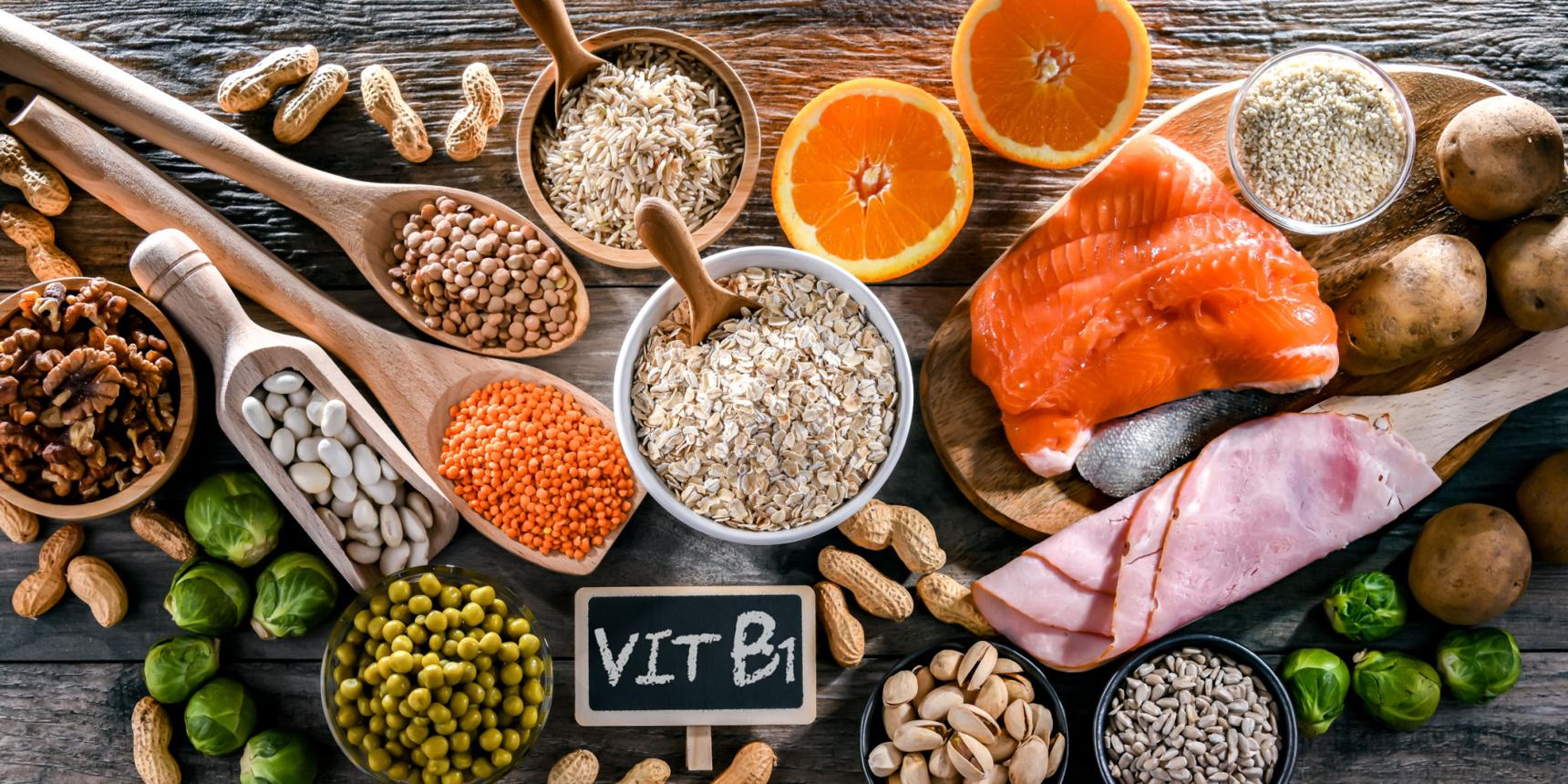
About Vitamin B1
Vitamin B1, also known as thiamine, is a water-soluble vitamin that plays a key role in energy metabolism.
It helps the body convert carbohydrates into energy and supports proper nerve and muscle function.
Why Is Vitamin B1 Important?
Vitamin B1 is essential for energy production, brain function, and maintaining a healthy nervous system.
Benefits of Vitamin B1
- Supports energy production
- Helps nervous system function
- Supports brain health
- Helps convert food into energy
- Supports heart function
Foods Rich in Vitamin B1
- Pork
- Sunflower seeds
- Brown rice
- Oats
- Beans
- Nuts
- Whole grains
Top 3 Foods Highest in Vitamin B1
- Pork – one of the richest sources of vitamin B1
- Sunflower Seeds – very high in thiamine
- Whole Grains – excellent daily source
Vitamin B1 Daily Intake
| Group | Recommended Daily Intake |
| Adult Men | 1.2 mg |
| Adult Women | 1.1 mg |
| Children | 0.5–1.0 mg |
Vitamin B1 Deficiency Symptoms
- Fatigue
- Weakness
- Nerve problems
- Loss of appetite
- Irritability
Vitamin B1 Overdose Risks
- Very rare toxicity
- Excess usually removed by the body
Vitamin B1 Supplements
Supplements may be helpful for people with low intake or certain health conditions.
Most people can get enough vitamin B1 from a balanced diet.
Related Vitamins and Minerals
FAQ
What happens if I don’t get enough vitamin B1?
Deficiency can cause fatigue, nerve problems, and weakness.
Can I get vitamin B1 from food only?
Yes, whole foods like grains, meat, and seeds provide enough for most people.
Is vitamin B1 important for energy?
Yes, it plays a key role in converting food into energy.