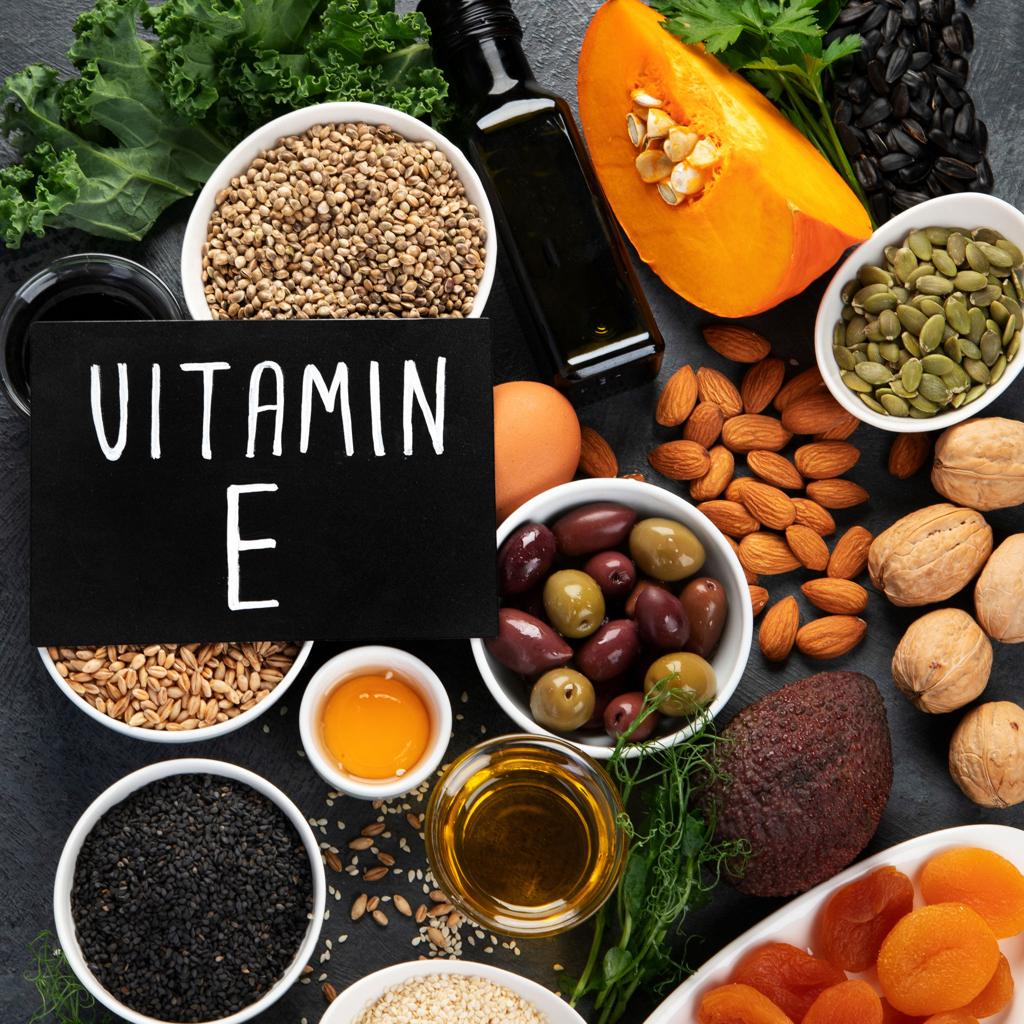
About Vitamin E
Vitamin E is a fat-soluble vitamin that acts as an antioxidant in the body.
It helps protect cells from damage and supports skin, eyes, and immune function.
Why Is Vitamin E Important?
Vitamin E helps protect the body from oxidative stress, supports immune defense, and plays a role in maintaining healthy skin and blood vessels.
Benefits of Vitamin E
- Acts as a powerful antioxidant
- Supports immune system
- Helps maintain healthy skin
- Supports eye health
- Helps protect cells from damage
Foods Rich in Vitamin E
- Sunflower seeds
- Almonds
- Avocado
- Spinach
- Peanuts
- Olive oil
- Wheat germ oil
Top 3 Foods Highest in Vitamin E
- Wheat Germ Oil – one of the richest sources of vitamin E
- Sunflower Seeds – very high in vitamin E
- Almonds – popular and easy source
Vitamin E Daily Intake
| Group | Recommended Daily Intake |
| Adults | 15 mg |
| Children | 6–11 mg |
Vitamin E Deficiency Symptoms
- Muscle weakness
- Vision problems
- Weak immune system
- Nerve problems
- Poor coordination
Vitamin E Overdose Risks
- Increased bleeding risk
- Nausea
- Headache
- Fatigue
Vitamin E Supplements
Vitamin E supplements may help people with low intake or certain absorption problems.
Most people can get enough vitamin E from foods like nuts, seeds, oils, and leafy greens. High doses should be used carefully.
Related Vitamins and Minerals
FAQ
What happens if I don’t get enough vitamin E?
Low vitamin E may cause muscle weakness, nerve problems, poor coordination, and weaker immunity.
Can I get vitamin E from food only?
Yes, many people can get enough vitamin E from nuts, seeds, oils, and leafy green vegetables.
Is vitamin E good for skin?
Yes, vitamin E helps protect cells and supports healthy skin.