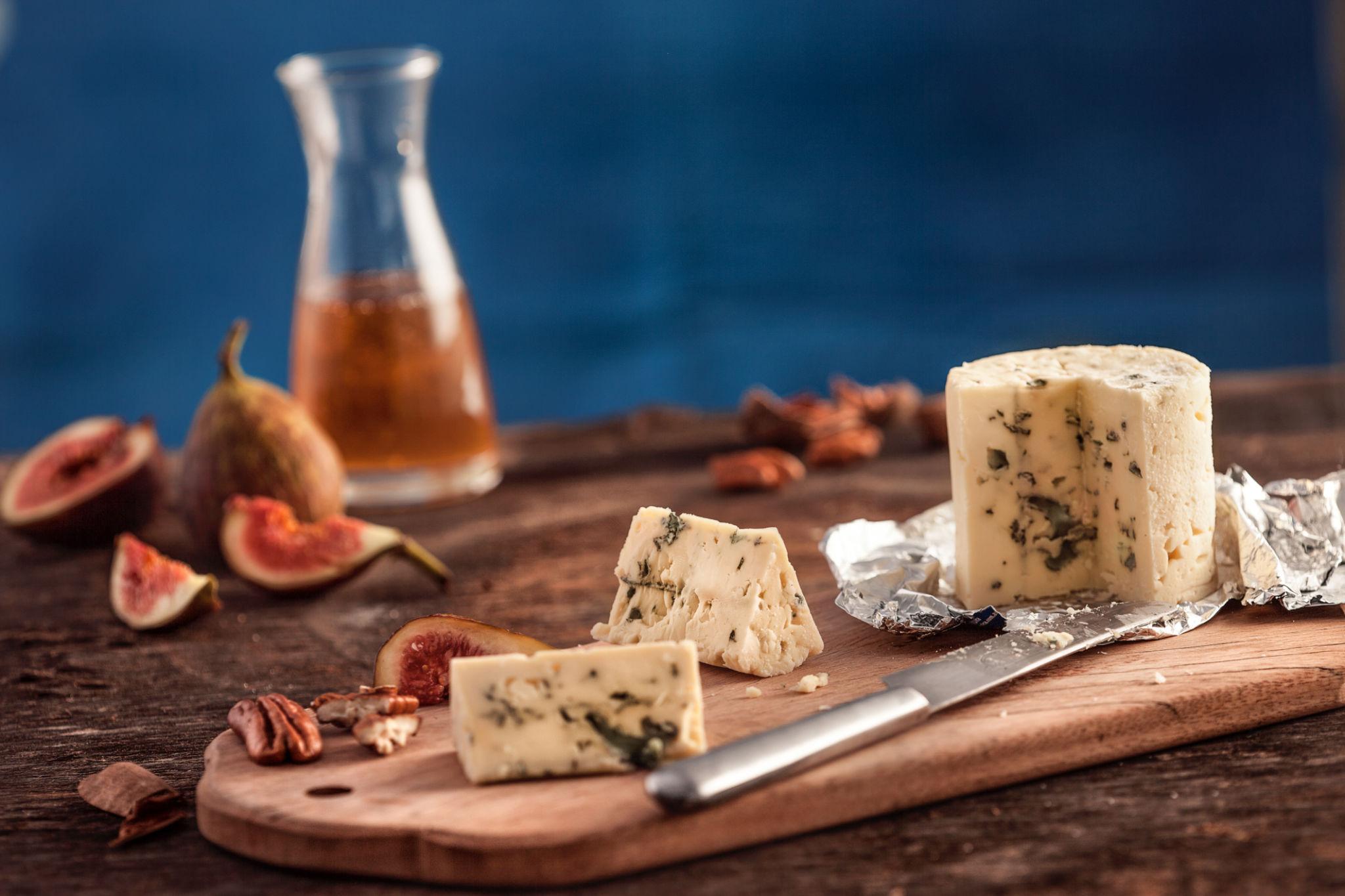
About Blue Cheese
Blue cheese is made with cultures of mold that give it its characteristic blue or green veins.
It has a strong aroma and flavor and is commonly used in salads, sauces, and gourmet dishes.
How Many Calories Are in Blue Cheese?
Blue cheese contains around 350–360 calories per 100 grams, making it a nutrient-dense продукт.
Blue Cheese Nutrition Facts (per 100g)
| Calories | 353 kcal |
| Protein | 21 g |
| Fat | 29 g |
| Carbohydrates | 2.3 g |
| Fiber | 0 g |
| Sugar | 1 g |
| Water | 42% |
Vitamins and Minerals
- Calcium - 528 mg
- Vitamin B12 - 1.2 mcg
- Phosphorus - 387 mg
- Zinc - 2.7 mg
- Selenium - 14 mcg
- Vitamin A - 198 mcg
Health Benefits of Blue Cheese
- Rich in calcium
- Good source of protein
- Supports bone health
- Contains beneficial compounds
- Provides essential nutrients
- Strong flavor in small portions
Calories in Different Portions
- 100g blue cheese - 353 kcal
- 1 serving (~30g) - ~105 kcal
- 1 tablespoon crumbled - ~30 kcal
Popular Ways to Eat Blue Cheese
- Salads
- Dressings
- Steak toppings
- Cheese boards
- Sauces
- Gourmet dishes
Is Blue Cheese Good for Weight Loss?
Blue cheese can be included in a weight loss diet in small amounts, as its strong flavor allows for smaller portions.
Additional Facts
- Contains mold cultures
- Strong flavor
- Used in gourmet cuisine
- Popular worldwide
Possible Downsides
Blue cheese is high in fat and sodium, so it should be consumed in moderation.
FAQ
Is blue cheese healthy?
Yes, in moderation, it provides nutrients and protein.
How much protein is in blue cheese?
About 21g per 100g.
Can I eat blue cheese every day?
Yes, but in small portions.