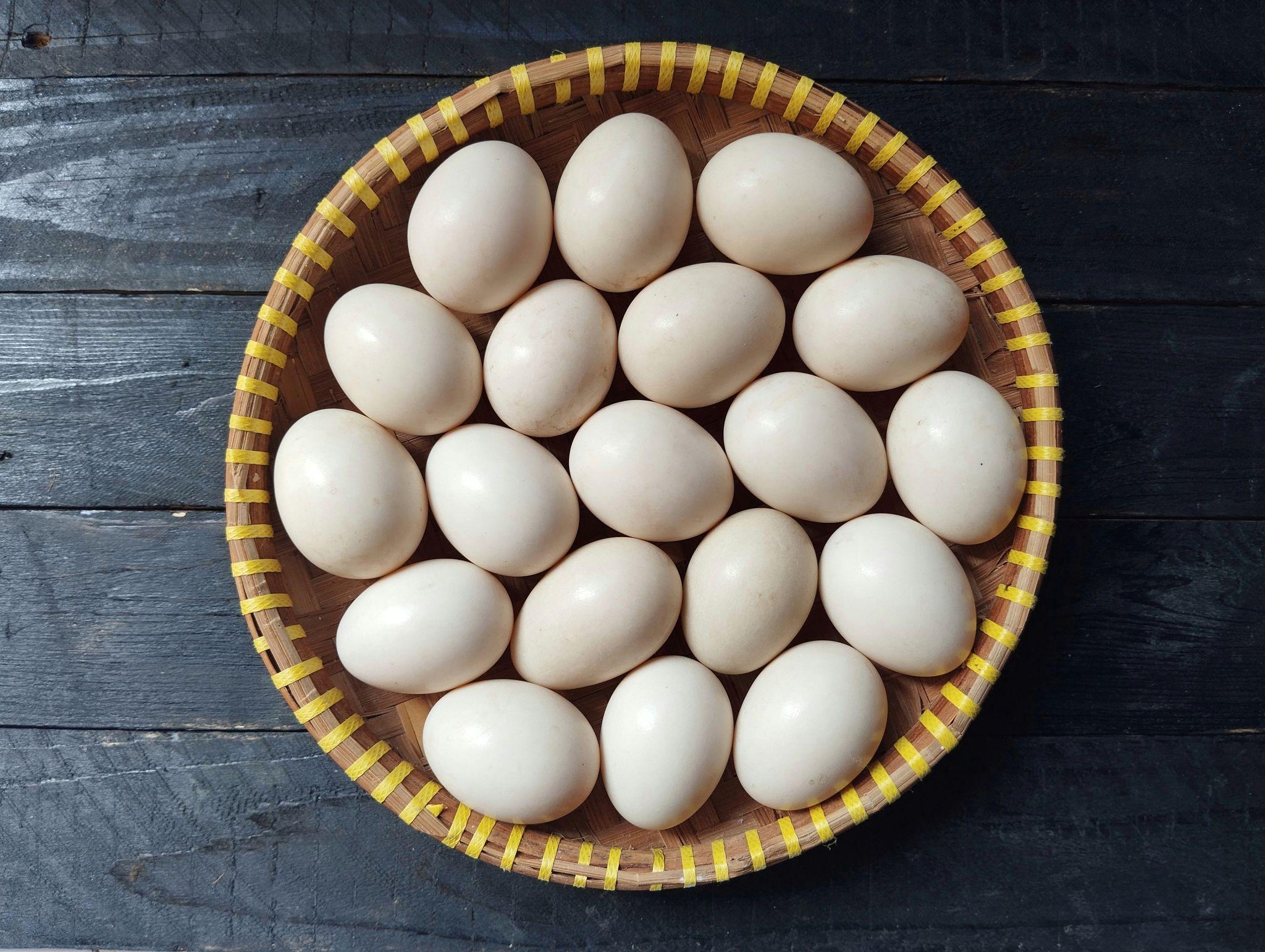
About Duck Eggs
Duck eggs are known for their larger size, richer taste, and thicker shells compared to chicken eggs.
They are often used in baking, gourmet recipes, and traditional cuisines due to their higher fat and protein content.
How Many Calories Are in Duck Eggs?
Duck eggs contain around 185 calories per 100 grams. One duck egg has about 130 calories.
Duck Eggs Nutrition Facts (per 100g)
| Calories | 185 kcal |
| Protein | 13 g |
| Fat | 14 g |
| Carbohydrates | 1.5 g |
| Fiber | 0 g |
| Sugar | 1.5 g |
| Water | 70% |
Vitamins and Minerals
- Vitamin B12 - 3.8 mcg
- Vitamin A - 270 mcg
- Iron - 3.9 mg
- Selenium - 36 mcg
- Phosphorus - 220 mg
- Choline - 295 mg
Health Benefits of Duck Eggs
- Higher in nutrients than chicken eggs
- Rich in protein and healthy fats
- Supports muscle growth
- Good source of iron and B vitamins
- Boosts energy levels
- Great for baking and cooking
Calories in Different Portions
- 100g duck eggs - 185 kcal
- 1 duck egg - ~130 kcal
- 2 duck eggs - ~260 kcal
Popular Ways to Eat Duck Eggs
- Boiled duck eggs
- Fried duck eggs
- Baking recipes
- Asian cuisine
- Salads
- Rich breakfast meals
Are Duck Eggs Good for Weight Loss?
Duck eggs can be part of a weight loss diet, but they are higher in calories than chicken eggs, so portion control is important.
Additional Facts
- Larger than chicken eggs
- Richer flavor
- Thicker shell
- Popular in gourmet cooking
Possible Downsides
Duck eggs are higher in fat and cholesterol, so they should be eaten in moderation, especially for people monitoring cholesterol intake.
FAQ
Are duck eggs healthy?
Yes, duck eggs are very nutritious and rich in protein and vitamins.
How much protein is in duck eggs?
Duck eggs contain about 13g of protein per 100g.
Can I eat duck eggs every day?
Yes, but in moderation due to higher calorie and fat content.