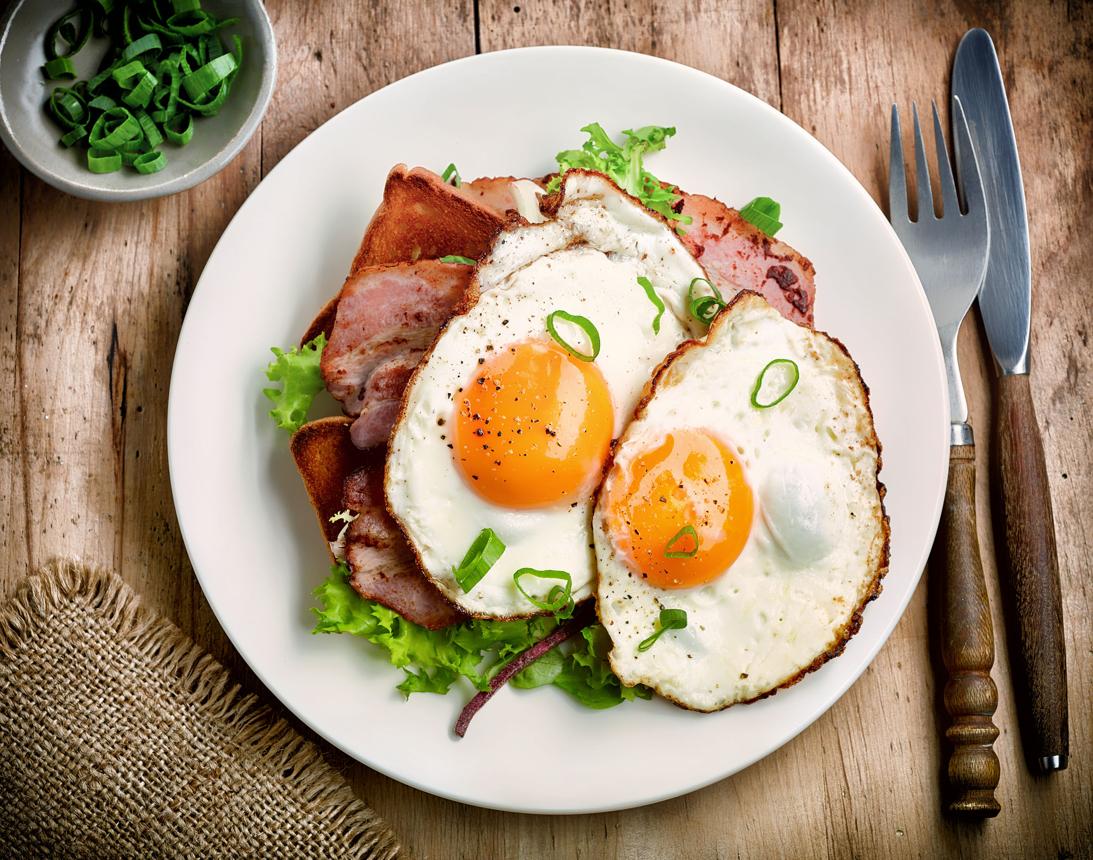
About Fried Eggs
Fried eggs are cooked in a pan with oil or butter, giving them a crispy edge and rich taste compared to boiled or poached eggs.
They are commonly served for breakfast and used in sandwiches, burgers, and various dishes around the world.
How Many Calories Are in Fried Eggs?
Fried eggs contain around 196 calories per 100 grams, depending on the amount of oil or butter used.
Fried Eggs Nutrition Facts (per 100g)
| Calories | 196 kcal |
| Protein | 13.6 g |
| Fat | 15 g |
| Carbohydrates | 1.1 g |
| Fiber | 0 g |
| Sugar | 1.1 g |
| Water | 70% |
Vitamins and Minerals
- Vitamin B12 - 1.1 mcg
- Vitamin D - 2.5 mcg
- Vitamin A - 180 mcg
- Selenium - 31 mcg
- Phosphorus - 210 mg
- Iron - 1.9 mg
Health Benefits of Fried Eggs
- High-quality protein source
- Supports muscle growth
- Rich in vitamins and minerals
- Provides long-lasting energy
- Delicious and satisfying meal
- Easy and quick to prepare
Calories in Different Portions
- 100g fried eggs - 196 kcal
- 1 fried egg - ~90 kcal
- 2 fried eggs - ~180 kcal
- 3 fried eggs - ~270 kcal
Popular Ways to Eat Fried Eggs
- Sunny-side up
- Over-easy
- Breakfast plates
- Burgers and sandwiches
- Rice bowls
- With vegetables
Are Fried Eggs Good for Weight Loss?
Fried eggs can be part of a weight loss diet, but they contain more calories than boiled eggs due to added fats. Using less oil or cooking spray can help reduce calorie intake.
Additional Facts
- Flavor depends on cooking method
- Can be cooked in butter or oil
- Popular worldwide breakfast food
- Often combined with other meals
Possible Downsides
Fried eggs may contain extra fat and calories depending on cooking oil. Overcooking can reduce some nutrients.
FAQ
Are fried eggs healthy?
Yes, but they are higher in calories than boiled eggs due to added fats.
How much protein is in fried eggs?
Fried eggs contain about 13.6g of protein per 100g.
Can I eat fried eggs every day?
Yes, but it is better to use minimal oil for a healthier option.