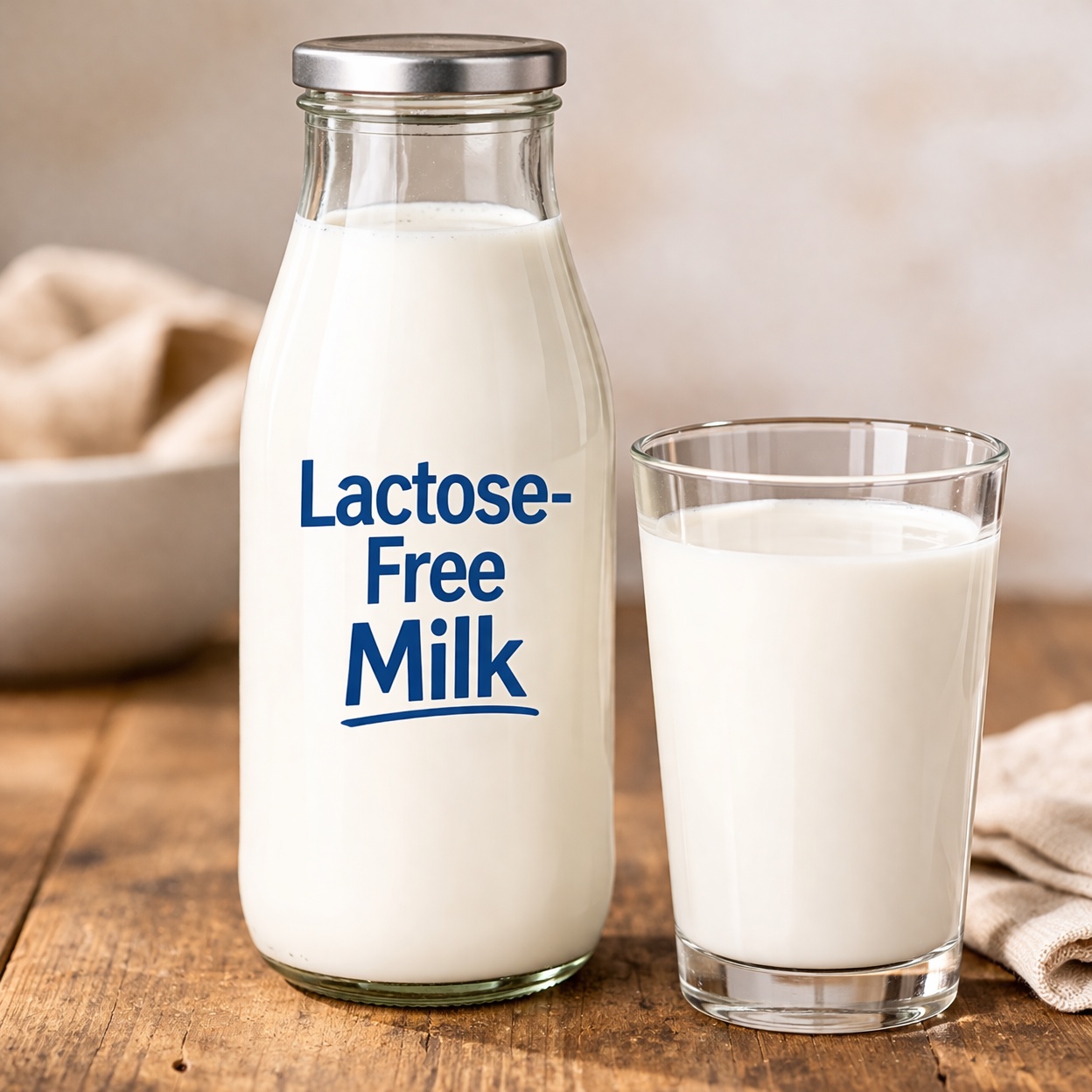
About Lactose Free Milk
Lactose free milk is made by adding the enzyme lactase to regular milk, which breaks down lactose into simpler sugars.
It is ideal for people with lactose intolerance who still want to enjoy the benefits of dairy.
How Many Calories Are in Lactose Free Milk?
Lactose free milk contains around 45–65 calories per 100 grams, depending on fat content (whole, low fat, or skim versions).
Lactose Free Milk Nutrition Facts (per 100g)
| Calories | 50 kcal |
| Protein | 3.4 g |
| Fat | 2 g |
| Carbohydrates | 5 g |
| Fiber | 0 g |
| Sugar | 5 g |
| Water | 88% |
Vitamins and Minerals
- Calcium - 120 mg
- Vitamin D - 1.2 mcg
- Vitamin B12 - 0.5 mcg
- Phosphorus - 95 mg
- Potassium - 150 mg
- Magnesium - 10 mg
Health Benefits of Lactose Free Milk
- Easier to digest for lactose intolerance
- Same nutrients as regular milk
- Good source of protein
- Supports bone health
- Provides calcium and vitamins
- Maintains muscle health
Calories in Different Portions
- 100g lactose free milk - 50 kcal
- 1 cup (240ml) - ~120 kcal
- 1 glass - ~140 kcal
Popular Ways to Drink Lactose Free Milk
- Plain
- With cereal
- Coffee
- Smoothies
- Protein shakes
- Cooking and baking
Is Lactose Free Milk Good for Weight Loss?
Yes. Lactose free milk can support weight loss when choosing lower-fat versions, as it provides protein and nutrients with moderate calories.
Additional Facts
- Contains no lactose discomfort
- Slightly sweeter taste
- Same nutritional value as milk
- Available in different fat levels
Possible Downsides
Lactose free milk still contains sugars (glucose and galactose), so it may taste sweeter than regular milk.
FAQ
Is lactose free milk healthy?
Yes, it provides the same nutrients as regular milk and is easier to digest.
Does lactose free milk have sugar?
Yes, but lactose is broken down into simpler sugars.
Can I drink lactose free milk every day?
Yes, it can be part of a healthy daily diet.