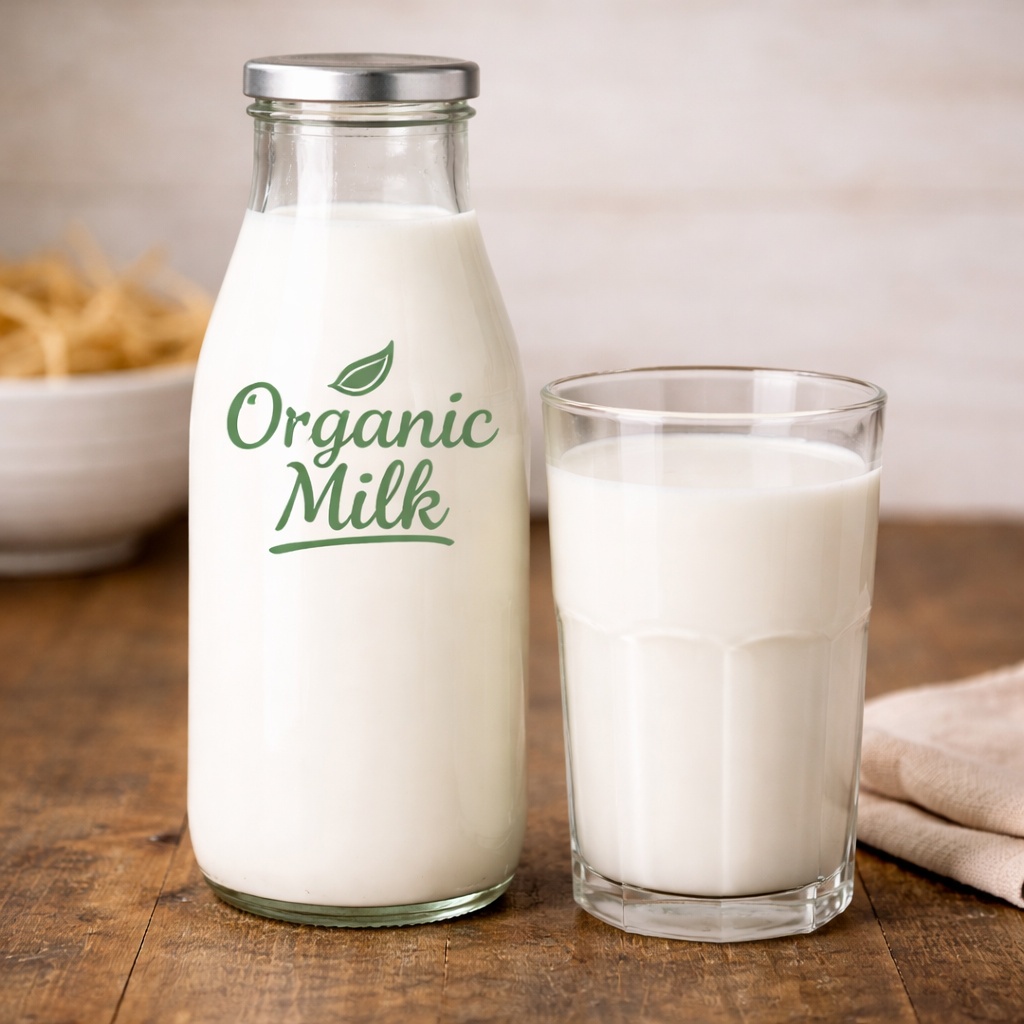
About Organic Milk
Organic milk comes from cows fed organic feed and raised under strict farming standards without synthetic chemicals.
It is often chosen by people who prefer natural and minimally processed foods.
How Many Calories Are in Organic Milk?
Organic milk contains around 50–65 calories per 100 grams, depending on fat content (whole, low fat, or skim).
Organic Milk Nutrition Facts (per 100g)
| Calories | 60 kcal |
| Protein | 3.3 g |
| Fat | 3.2 g |
| Carbohydrates | 4.8 g |
| Fiber | 0 g |
| Sugar | 4.8 g |
| Water | 87% |
Vitamins and Minerals
- Calcium - 120 mg
- Vitamin D - 1.2 mcg
- Vitamin B12 - 0.5 mcg
- Phosphorus - 95 mg
- Potassium - 150 mg
- Magnesium - 10 mg
Health Benefits of Organic Milk
- Free from synthetic hormones and antibiotics
- Rich in calcium and protein
- Supports bone health
- Provides essential nutrients
- May contain more omega-3 fats
- Natural and minimally processed
Calories in Different Portions
- 100g organic milk - 60 kcal
- 1 cup (240ml) - ~150 kcal
- 1 glass - ~180 kcal
Popular Ways to Drink Organic Milk
- Plain
- With cereal
- Coffee
- Smoothies
- Protein shakes
- Cooking and baking
Is Organic Milk Good for Weight Loss?
Organic milk can be part of a weight loss diet when consumed in moderation. Choosing low-fat versions can help reduce calorie intake.
Additional Facts
- Produced under strict organic standards
- Often has a richer taste
- Preferred by health-conscious consumers
- Available in different fat levels
Possible Downsides
Organic milk is usually more expensive than regular milk, and it still contains fat and calories depending on the type.
FAQ
Is organic milk healthier?
It has similar nutrients to regular milk but is produced without synthetic additives.
Does organic milk have more nutrients?
It may have slightly more omega-3 fats, but overall nutrition is similar.
Can I drink organic milk every day?
Yes, it can be part of a healthy daily diet.