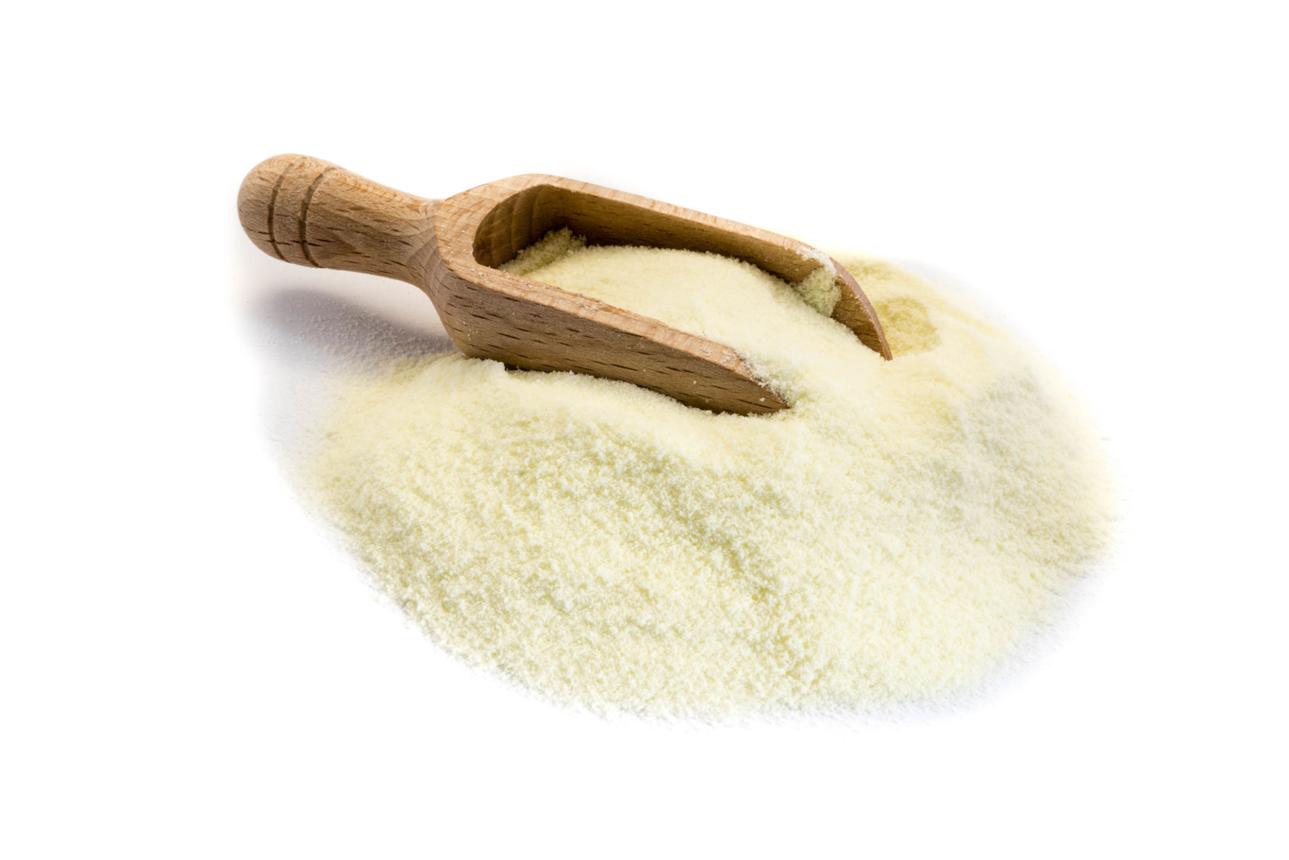
About Powdered Milk
Powdered milk is made by removing almost all water from milk, turning it into a dry powder that can be reconstituted with water.
It is widely used for storage, travel, baking, and in areas where fresh milk is not easily available.
How Many Calories Are in Powdered Milk?
Powdered milk contains around 490–500 calories per 100 grams, making it very energy-dense due to low water content.
Powdered Milk Nutrition Facts (per 100g)
| Calories | 496 kcal |
| Protein | 26 g |
| Fat | 26 g |
| Carbohydrates | 38 g |
| Fiber | 0 g |
| Sugar | 38 g |
| Water | 3% |
Vitamins and Minerals
- Calcium - 912 mg
- Vitamin D - 2.5 mcg
- Vitamin B12 - 3 mcg
- Phosphorus - 800 mg
- Potassium - 1300 mg
- Magnesium - 85 mg
Health Benefits of Powdered Milk
- Long shelf life
- High in protein
- Rich in calcium
- Convenient for storage
- Supports bone health
- Easy to transport
Calories in Different Portions
- 100g powdered milk - 496 kcal
- 1 tablespoon - ~50 kcal
- 1 cup prepared (with water) - ~120 kcal
Popular Ways to Use Powdered Milk
- Mixed with water
- Baking
- Coffee and tea
- Cooking
- Emergency food supply
- Travel and camping
Is Powdered Milk Good for Weight Loss?
Powdered milk can be used in moderation for weight loss, but it is calorie-dense and should be carefully portioned.
Additional Facts
- Dehydrated milk form
- Long shelf life
- Highly concentrated nutrients
- Easy to store
Possible Downsides
Powdered milk is high in calories and sugars when dry, and may not taste the same as fresh milk.
FAQ
Is powdered milk healthy?
Yes, it contains similar nutrients to regular milk but in concentrated form.
Can powdered milk replace fresh milk?
Yes, when mixed with water it can be used as a substitute.
Can I drink powdered milk every day?
Yes, when prepared properly as part of a balanced diet.