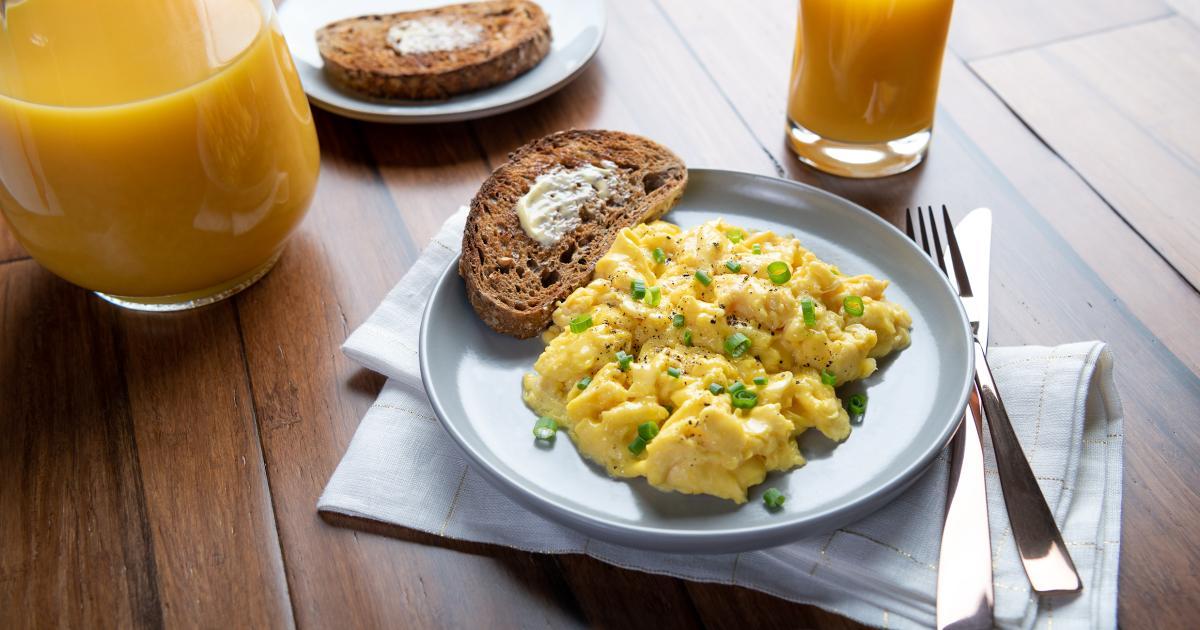
About Scrambled Eggs
Scrambled eggs are made by beating eggs and cooking them slowly while stirring, creating a soft and fluffy texture.
They are commonly eaten for breakfast and can be customized with milk, butter, cheese, or vegetables.
How Many Calories Are in Scrambled Eggs?
Scrambled eggs contain around 148–180 calories per 100 grams, depending on added ingredients like butter or milk.
Scrambled Eggs Nutrition Facts (per 100g)
| Calories | 167 kcal |
| Protein | 10.5 g |
| Fat | 13 g |
| Carbohydrates | 1.6 g |
| Fiber | 0 g |
| Sugar | 1.6 g |
| Water | 73% |
Vitamins and Minerals
- Vitamin B12 - 1.1 mcg
- Vitamin D - 2.4 mcg
- Vitamin A - 170 mcg
- Selenium - 30 mcg
- Phosphorus - 200 mg
- Iron - 1.8 mg
Health Benefits of Scrambled Eggs
- Good source of protein
- Supports muscle growth
- Provides essential vitamins
- Soft and easy to digest
- Customizable with healthy ingredients
- Quick and easy to prepare
Calories in Different Portions
- 100g scrambled eggs - 167 kcal
- 1 serving (2 eggs) - ~180–200 kcal
- 3 eggs scrambled - ~270–300 kcal
Popular Ways to Eat Scrambled Eggs
- With toast
- With vegetables
- With cheese
- Breakfast bowls
- Sandwiches
- High-protein meals
Are Scrambled Eggs Good for Weight Loss?
Scrambled eggs can be part of a weight loss diet, especially when cooked with minimal butter or oil. Adding vegetables instead of high-fat ingredients can make them even healthier.
Additional Facts
- Texture depends on cooking method
- Can be creamy or firm
- Popular worldwide breakfast food
- Often combined with other foods
Possible Downsides
Scrambled eggs can contain extra calories if cooked with a lot of butter, oil, or cheese. Portion control is important.
FAQ
Are scrambled eggs healthy?
Yes, especially when cooked with minimal added fats.
How much protein is in scrambled eggs?
Scrambled eggs contain about 10.5g of protein per 100g.
Can I eat scrambled eggs every day?
Yes, if prepared in a healthy way without excess fat.