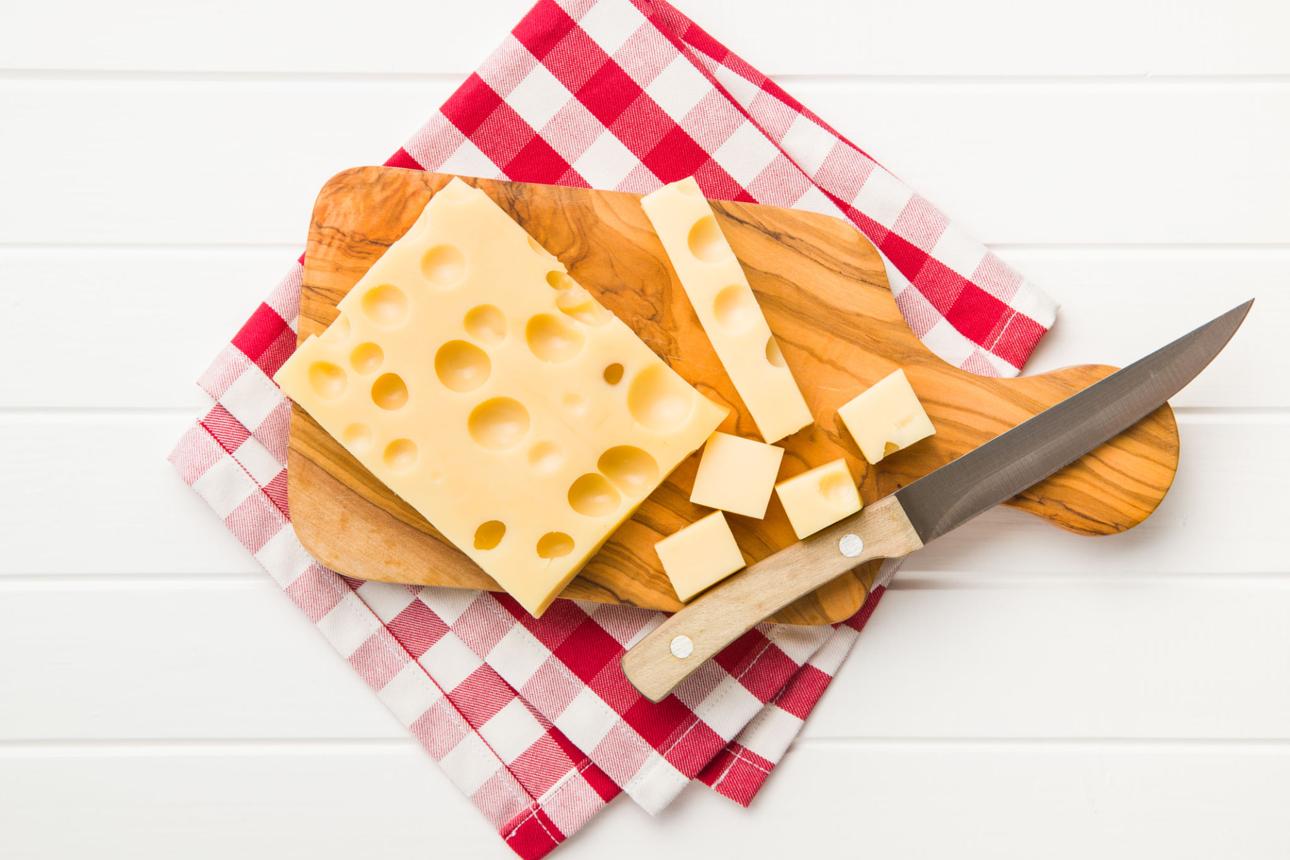
About Swiss Cheese
Swiss cheese refers to a group of cheeses originally from Switzerland, with Emmental being the most famous type.
It is recognized for its round holes and slightly sweet, nutty flavor.
How Many Calories Are in Swiss Cheese?
Swiss cheese contains around 380–400 calories per 100 grams, making it a nutrient-dense food.
Swiss Cheese Nutrition Facts (per 100g)
| Calories | 393 kcal |
| Protein | 27 g |
| Fat | 31 g |
| Carbohydrates | 1.5 g |
| Fiber | 0 g |
| Sugar | 0.4 g |
| Water | 37% |
Vitamins and Minerals
- Calcium - 890 mg
- Vitamin B12 - 1.7 mcg
- Phosphorus - 605 mg
- Zinc - 4 mg
- Selenium - 14 mcg
- Vitamin A - 260 mcg
Health Benefits of Swiss Cheese
- High in protein
- Excellent source of calcium
- Supports bone health
- Lower in sodium than some cheeses
- Provides essential nutrients
- Supports muscle function
Calories in Different Portions
- 100g Swiss cheese - 393 kcal
- 1 slice (~28g) - ~110 kcal
- 30g serving - ~120 kcal
Popular Ways to Eat Swiss Cheese
- Sandwiches
- Burgers
- Fondue
- Snacks
- Salads
- Melted dishes
Is Swiss Cheese Good for Weight Loss?
Swiss cheese can be included in a weight loss diet in moderation, as it provides protein and nutrients but is calorie-dense.
Additional Facts
- Known for its holes
- Mild and slightly sweet flavor
- Popular worldwide
- Used in traditional Swiss dishes
Possible Downsides
Swiss cheese is high in calories and fat, so it should be eaten in moderate portions.
FAQ
Is Swiss cheese healthy?
Yes, it is rich in protein and calcium.
How much protein is in Swiss cheese?
About 27g per 100g.
Can I eat Swiss cheese every day?
Yes, in moderate amounts.