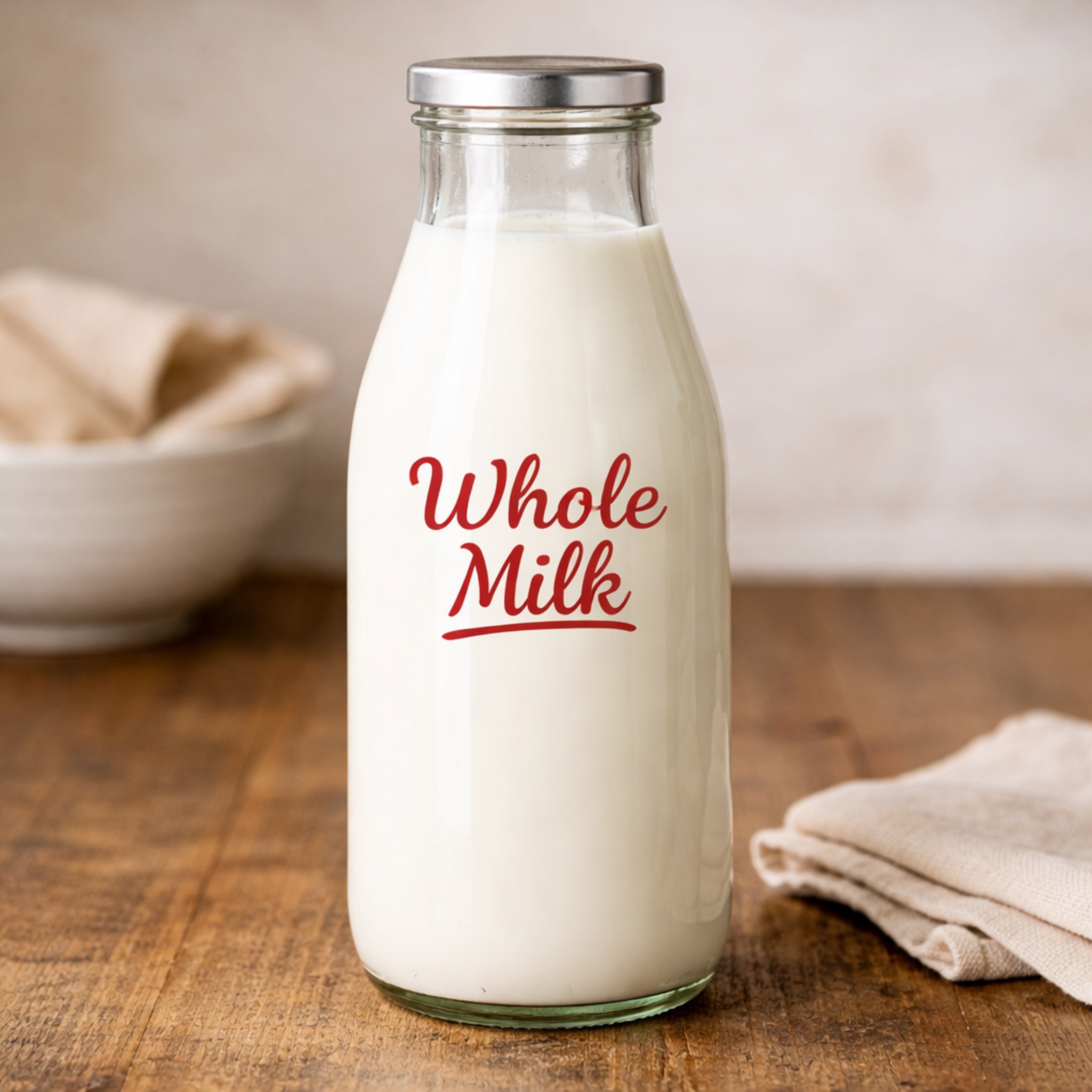
About Whole Milk
Whole milk is milk that has not had its fat removed, typically containing about 3.25% milk fat.
It is widely used as a beverage and in cooking, baking, coffee, and many recipes.
How Many Calories Are in Whole Milk?
Whole milk contains around 60–65 calories per 100 grams, making it higher in calories than low-fat or skim milk.
Whole Milk Nutrition Facts (per 100g)
| Calories | 61 kcal |
| Protein | 3.2 g |
| Fat | 3.3 g |
| Carbohydrates | 4.8 g |
| Fiber | 0 g |
| Sugar | 4.8 g |
| Water | 87% |
Vitamins and Minerals
- Calcium - 113 mg
- Vitamin D - 1.3 mcg
- Vitamin B12 - 0.4 mcg
- Phosphorus - 95 mg
- Potassium - 150 mg
- Magnesium - 10 mg
Health Benefits of Whole Milk
- Provides healthy fats
- Supports bone health
- Good source of protein
- Helps with energy intake
- Rich in essential vitamins
- Supports muscle recovery
Calories in Different Portions
- 100g whole milk - 61 kcal
- 1 cup (240ml) whole milk - ~150 kcal
- 1 glass whole milk - ~180 kcal
Popular Ways to Drink Whole Milk
- Plain
- With cereal
- Coffee and lattes
- Smoothies
- Baking
- Cooking sauces
Is Whole Milk Good for Weight Loss?
Whole milk can be included in a weight loss diet in moderation, but lower-fat options may be better for reducing calorie intake.
Additional Facts
- Contains natural milk fat
- Richer taste than low-fat milk
- Common in many recipes
- Widely available worldwide
Possible Downsides
Whole milk is higher in fat and calories, so it should be consumed in moderation, especially for those monitoring calorie intake.
FAQ
Is whole milk healthy?
Yes, it provides essential nutrients, but should be consumed in moderation.
How much fat is in whole milk?
About 3.3g of fat per 100g.
Can I drink whole milk every day?
Yes, as part of a balanced diet.