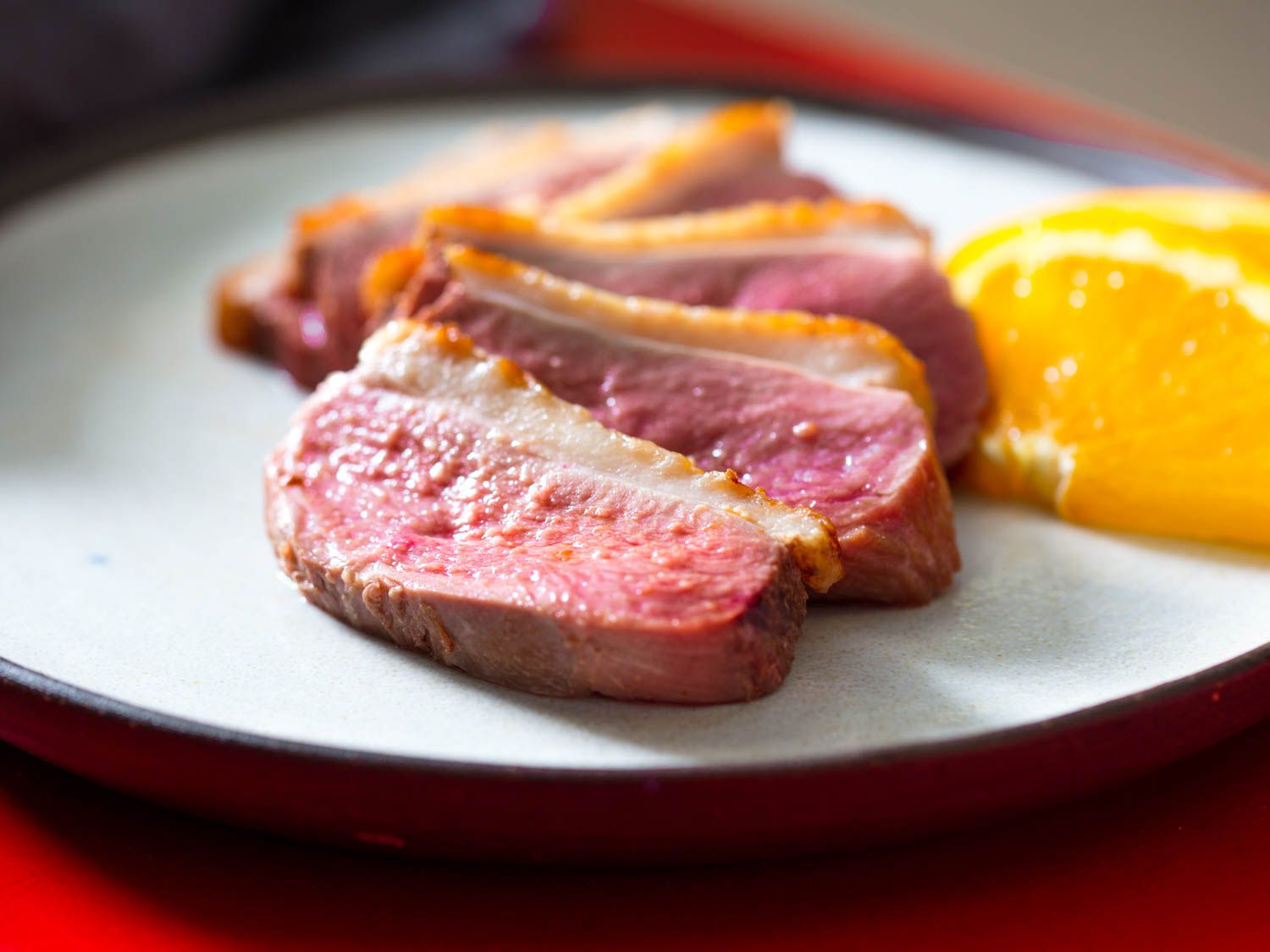
About Duck
Duck is a type of poultry known for its rich taste and higher fat content compared to chicken and turkey. It is commonly used in gourmet dishes.
It is especially popular in Asian and European cuisines and often served roasted.
How Many Calories Are in Duck?
Duck contains around 337 calories per 100 grams (with skin). Removing the skin significantly reduces fat and calories.
Duck Nutrition Facts (per 100g)
| Calories | 337 kcal |
| Protein | 19 g |
| Fat | 28 g |
| Carbohydrates | 0 g |
| Fiber | 0 g |
| Sugar | 0 g |
| Water | 52% |
Vitamins and Minerals
- Iron - 2.7 mg
- Zinc - 2 mg
- Vitamin B12 - 0.4 mcg
- Vitamin B6 - 0.3 mg
- Vitamin B3 (Niacin) - 4 mg
- Selenium - 14 mcg
Health Benefits of Duck
- Rich in protein
- High in iron
- Provides healthy fats
- Supports energy levels
- Good for muscle maintenance
- Highly satisfying food
Calories in Different Portions
- 100g duck (with skin) - 337 kcal
- 100g duck (without skin) - ~200 kcal
- 1 duck breast - ~350-400 kcal
- Roasted duck (100g) - ~330 kcal
Popular Duck Dishes
- Roast duck
- Peking duck
- Duck breast steak
- Duck soup
- Grilled duck
- Asian-style duck dishes
Is Duck Good for Muscle Growth?
Yes. Duck provides protein for muscle growth, but it is higher in fat, so it should be eaten in moderation compared to lean meats.
Additional Facts
- Higher fat content than chicken or turkey
- Very rich flavor
- Popular in gourmet cooking
- Contains essential nutrients
Possible Downsides
Duck can be high in fat and calories, especially when eaten with skin. Removing the skin makes it a healthier option.
FAQ
Is duck healthy?
Yes, but it is higher in fat than other poultry.
Is duck better than chicken?
Duck has more fat and flavor, while chicken is leaner.
Can duck be part of a healthy diet?
Yes, when eaten in moderation.