About Collagen
Collagen is the most abundant protein in the body and is a major part of skin, bones, tendons, ligaments, and cartilage.
The body naturally makes collagen, but production may decrease with age.
Why Is Collagen Important?
Collagen helps maintain skin elasticity, joint comfort, bone strength, and healthy connective tissues.
Benefits of Collagen
- Supports skin elasticity
- Supports joint health
- Helps maintain strong bones
- Supports tendons and ligaments
- May support hair and nail health
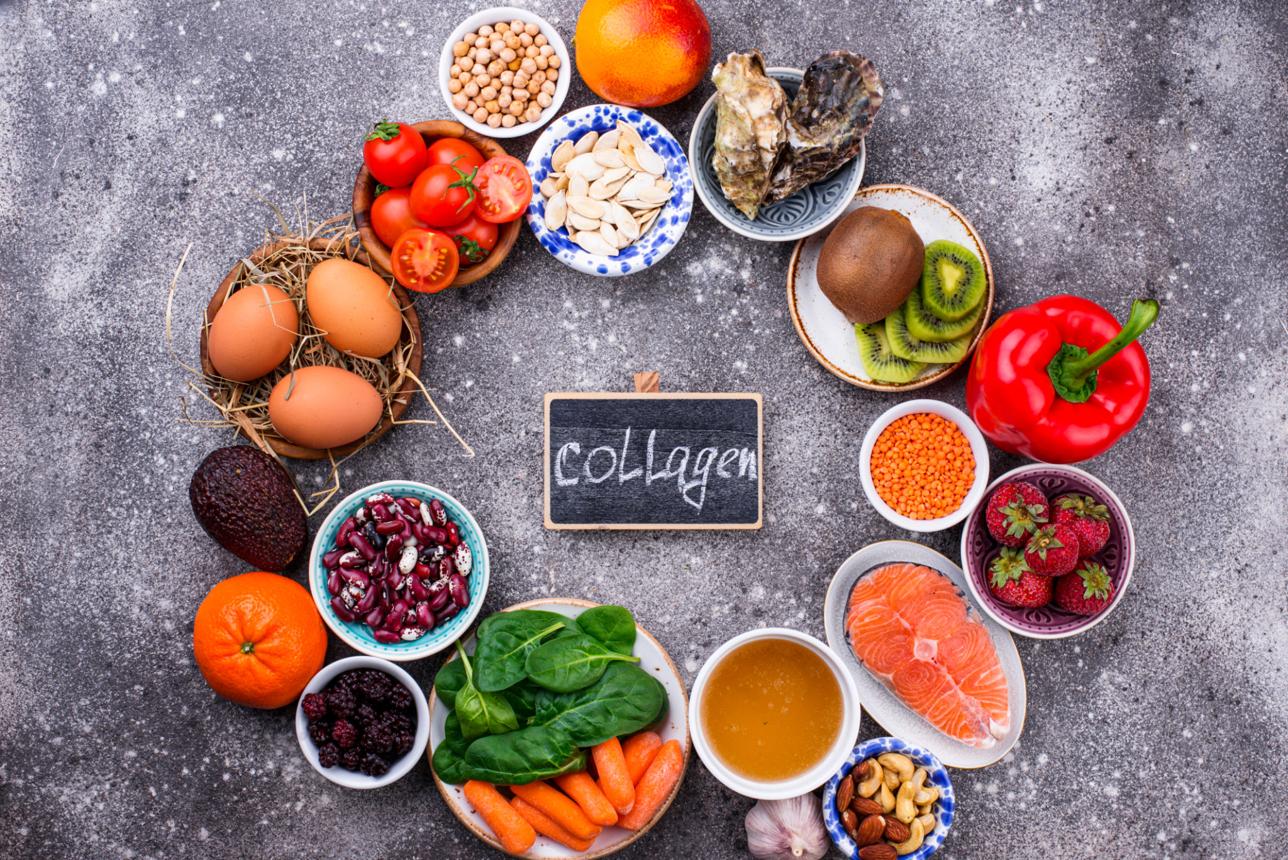
Foods That Support Collagen
- Bone broth
- Chicken skin
- Fish skin
- Eggs
- Beef
- Citrus fruits
- Berries
Top 3 Foods Highest in Collagen
- Bone Broth – one of the most popular collagen-rich foods
- Chicken Skin – naturally contains collagen
- Fish Skin – rich in marine collagen
Collagen Daily Intake
| Group | Common Daily Amount |
| Adults | 2.5–10 g collagen peptides |
| Active Adults | 10–15 g collagen peptides |
Low Collagen Signs
- Less skin elasticity
- Joint discomfort
- Weak nails
- Slower recovery
- Wrinkles with aging
Collagen Supplement Risks
- Digestive discomfort
- Unpleasant taste
- Possible allergy risk from fish or beef sources
Collagen Supplements
Collagen supplements are often sold as collagen peptides or hydrolyzed collagen.
They may be useful for people who want extra support for skin, joints, tendons, or recovery.
Related Vitamins and Nutrients
FAQ
What happens if collagen levels decrease?
Lower collagen may lead to less skin elasticity, wrinkles, joint discomfort, and weaker connective tissues.
Can I get collagen from food only?
Yes, foods like bone broth, chicken skin, fish skin, and protein-rich foods can support collagen intake and production.
Is vitamin C important for collagen?
Yes, vitamin C is needed for normal collagen production in the body.