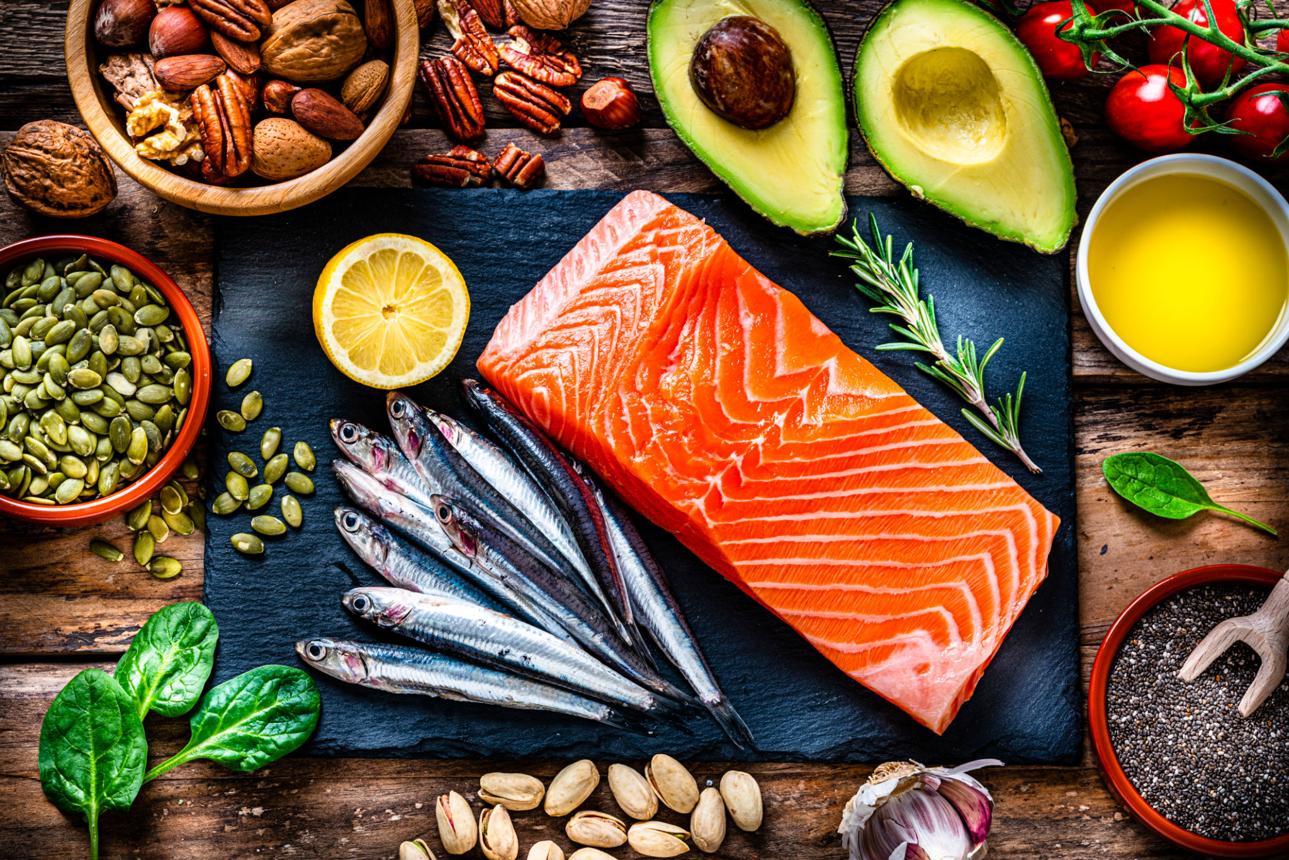
About Omega 3
Omega 3 is a group of essential fatty acids that the body cannot produce on its own.
The main types are EPA, DHA (from fish), and ALA (from plant sources).
Why Is Omega 3 Important?
Omega 3 supports the heart, brain, and eyes, and helps reduce inflammation throughout the body.
Benefits of Omega 3
- Supports heart health
- Supports brain function
- Helps reduce inflammation
- Supports eye health
- May improve mood
Foods Rich in Omega 3
- Salmon
- Mackerel
- Sardines
- Chia seeds
- Flax seeds
- Walnuts
- Fish oil
Top 3 Foods Highest in Omega 3
- Salmon – rich in EPA and DHA
- Mackerel – one of the highest omega 3 fish
- Chia Seeds – excellent plant-based source
Omega 3 Daily Intake
| Group | Recommended Daily Intake |
| Adults | 250–500 mg (EPA + DHA) |
| Children | 100–250 mg |
Omega 3 Deficiency Symptoms
- Dry skin
- Fatigue
- Poor concentration
- Joint pain
- Mood changes
Omega 3 Overdose Risks
- Increased bleeding risk
- Stomach upset
- Low blood pressure (high doses)
Omega 3 Supplements
Omega 3 supplements like fish oil are commonly used to support heart and brain health.
Supplements may be useful if you don’t eat fish regularly.
Related Vitamins and Nutrients
FAQ
What happens if I don’t get enough omega 3?
Low omega 3 may cause dry skin, fatigue, poor focus, and inflammation.
Can I get omega 3 from food only?
Yes, fatty fish, seeds, and nuts provide omega 3.
Is omega 3 good for the heart?
Yes, omega 3 helps support heart health and may reduce inflammation.