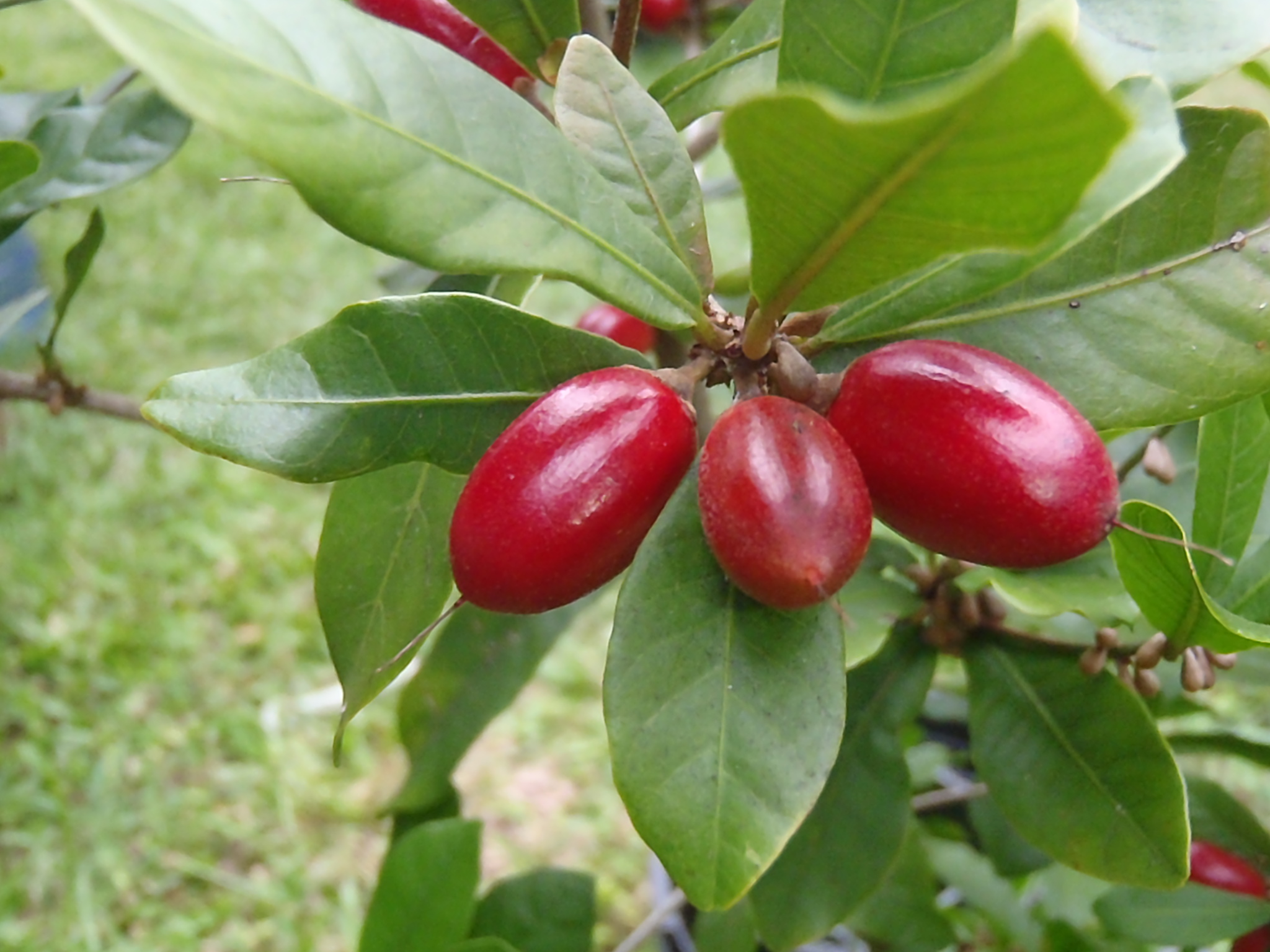
About Miracle Berry
Miracle berries come from a West African plant and contain a protein called miraculin, which temporarily alters taste perception.
After eating a miracle berry, sour foods like lemons taste sweet for up to an hour.
How Many Calories Are in Miracle Berry?
Miracle berries contain about 30 calories per 100 grams, making them a very low-calorie fruit.
Miracle Berry Nutrition Facts (per 100g)
| Calories | 30 kcal |
| Protein | 0.4 g |
| Fat | 0.1 g |
| Carbohydrates | 7 g |
| Fiber | 1 g |
| Sugar | 3 g |
| Water | 88% |
Vitamins and Minerals
Health Benefits of Miracle Berry
- Alters taste perception naturally
- May help reduce sugar intake
- Low in calories
- Contains beneficial plant compounds
- Used in dietary and medical research
- Supports healthy eating habits
Calories in Different Portions
- 100g of miracle berries - 30 kcal
- 1 berry - about 1 kcal
- 1 serving (2–3 berries) - about 3 kcal
- Miracle berry tablet - almost 0 kcal
Popular Miracle Berry Uses
- Taste transformation experiments
- Healthy diet support
- Low-sugar desserts
- Food experiences (“flavor tripping”)
- Dietary supplements
- Medical nutrition research
Is Miracle Berry Good for Weight Loss?
Yes, miracle berries may help reduce sugar consumption by making sour foods taste sweet, which can support a lower-calorie diet.
Additional Facts
- Native to West Africa.
- Contains miraculin, a unique protein.
- Effect lasts 30–60 minutes.
- Popular in food science and experiments.
Possible Downsides
Effects are temporary, and consuming large amounts is unnecessary. Some products may vary in quality depending on processing.
FAQ
How many calories are in miracle berries?
About 30 kcal per 100g.
Are miracle berries healthy?
Yes, they are low in calories and may help reduce sugar intake.
What do miracle berries do?
They make sour foods taste sweet by altering taste perception.