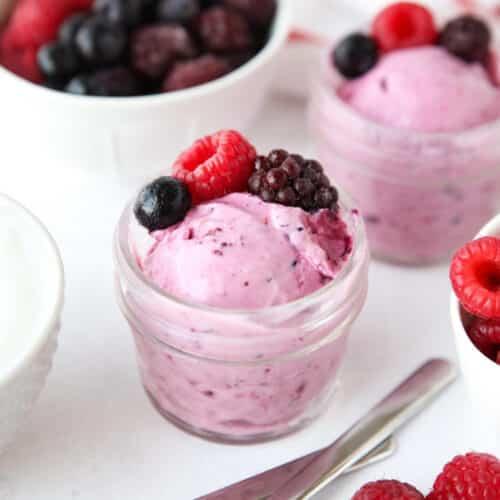
About Frozen Yogurt
Frozen yogurt is made by freezing yogurt mixed with sugar and flavorings, resulting in a creamy, slightly tangy dessert.
It is often marketed as a healthier alternative to ice cream.
How Many Calories Are in Frozen Yogurt?
Frozen yogurt contains around 120–180 calories per 100 grams, depending on ingredients and toppings.
Frozen Yogurt Nutrition Facts (per 100g)
| Calories | 159 kcal |
| Protein | 4 g |
| Fat | 4 g |
| Carbohydrates | 27 g |
| Fiber | 0.5 g |
| Sugar | 24 g |
| Water | 64% |
Vitamins and Minerals
- Calcium - 140 mg
- Vitamin B12 - 0.5 mcg
- Phosphorus - 110 mg
- Potassium - 170 mg
- Magnesium - 15 mg
- Vitamin A - 120 mcg
Health Considerations
- Lower fat than ice cream
- Contains sugar
- Provides calcium
- Refreshing dessert
- May contain probiotics
- Wide variety of flavors
Calories in Different Portions
- 100g frozen yogurt - 159 kcal
- 1 cup (~130g) - ~200 kcal
- 1 serving (~100g) - ~160 kcal
Popular Ways to Eat Frozen Yogurt
- With toppings
- Fruit bowls
- Desserts
- Cones
- Cups
- Summer treats
Is Frozen Yogurt Good for Weight Loss?
Frozen yogurt can be a better option than ice cream, but added sugar should be considered.
Additional Facts
- Frozen dairy dessert
- Made from yogurt
- Slightly tangy taste
- Popular alternative to ice cream
Possible Downsides
High sugar content and toppings can increase calorie intake.
FAQ
Is frozen yogurt healthier than ice cream?
It is usually lower in fat but may still contain sugar.
Does frozen yogurt have probiotics?
Some types do, but not all survive freezing.
Can I eat frozen yogurt every day?
It is best consumed in moderation.