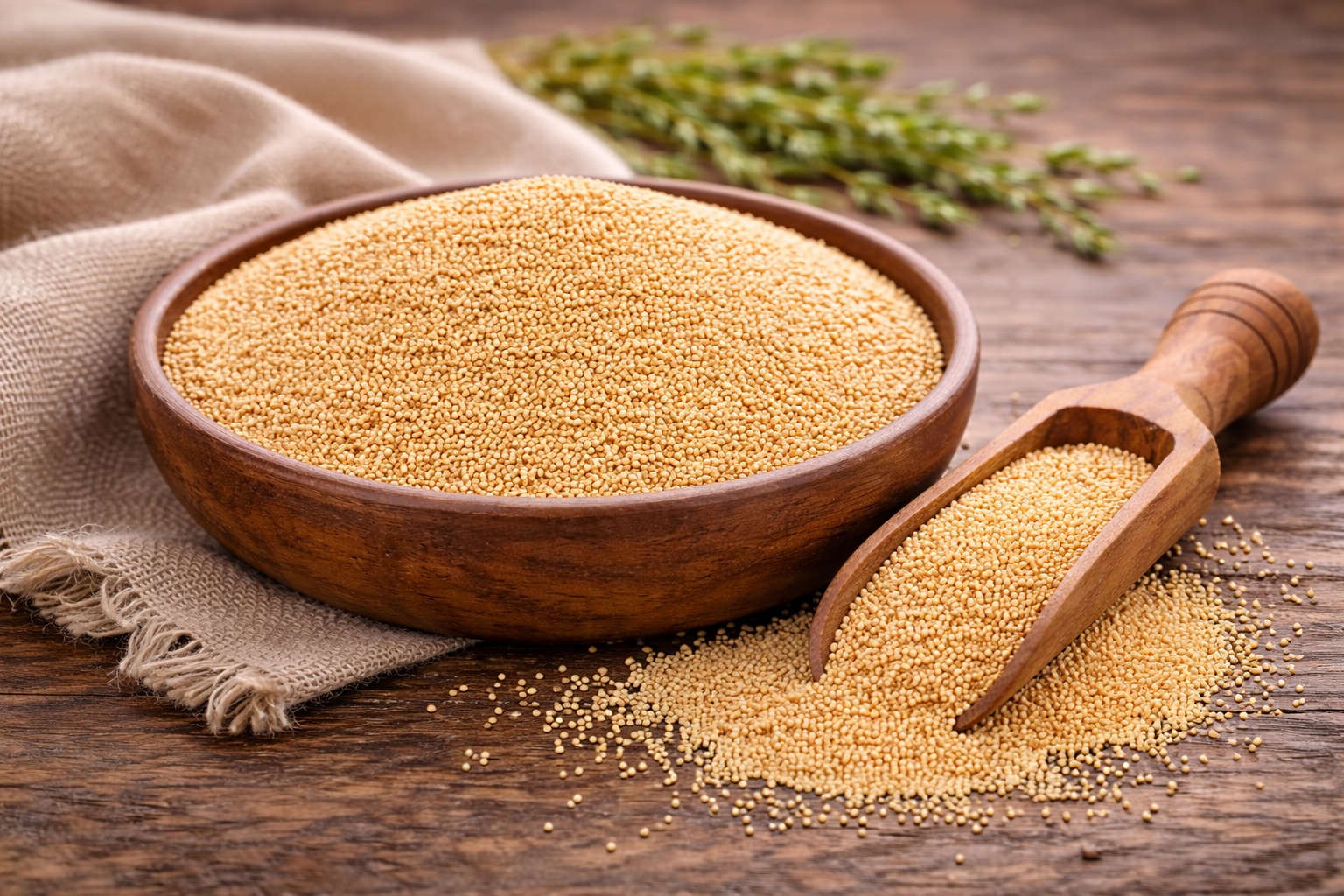
About Amaranth
Amaranth is not a true grain but a seed that has been cultivated for thousands of years. It is commonly used in porridge, baking, and gluten-free recipes.
It is valued for its high protein quality and nutrient richness.
How Many Calories Are in Amaranth?
Amaranth contains around 102 calories per 100 grams (cooked), making it a light and nutritious food.
Amaranth Nutrition Facts (per 100g)
| Calories | 102 kcal |
| Protein | 3.8 g |
| Fat | 1.6 g |
| Carbohydrates | 19 g |
| Fiber | 2.1 g |
| Sugar | 0.9 g |
| Water | 72% |
Vitamins and Minerals
- Magnesium - 65 mg
- Phosphorus - 148 mg
- Iron - 2.1 mg
- Calcium - 47 mg
- Zinc - 0.9 mg
- Vitamin B6 - 0.1 mg
Health Benefits of Amaranth
- Gluten-free
- High-quality plant protein
- Supports heart health
- Rich in minerals
- Helps control blood sugar
- Good for digestion
Calories in Different Portions
- 100g cooked amaranth - 102 kcal
- 1 cup cooked amaranth (246g) - ~251 kcal
- 1/2 cup cooked amaranth (123g) - ~126 kcal
- 1 tablespoon cooked amaranth (15g) - ~15 kcal
Popular Ways to Eat Amaranth
- Porridge
- Grain bowls
- Gluten-free baking
- Salads
- Side dishes
- Healthy recipes
Are Amaranth Good for Weight Loss?
Yes. Amaranth can support weight loss due to its protein and fiber content, helping you stay full longer.
Additional Facts
- Ancient crop used by Aztecs
- Not a true grain (pseudo-grain)
- Contains all essential amino acids
- Highly nutritious and versatile
Possible Downsides
Amaranth is generally safe, but should be eaten in moderation as part of a balanced diet.
FAQ
Is amaranth healthy?
Yes, amaranth is a highly nutritious and protein-rich food.
Is amaranth gluten-free?
Yes, amaranth does not contain gluten.
Can I eat amaranth every day?
Yes, amaranth can be part of a healthy daily diet.