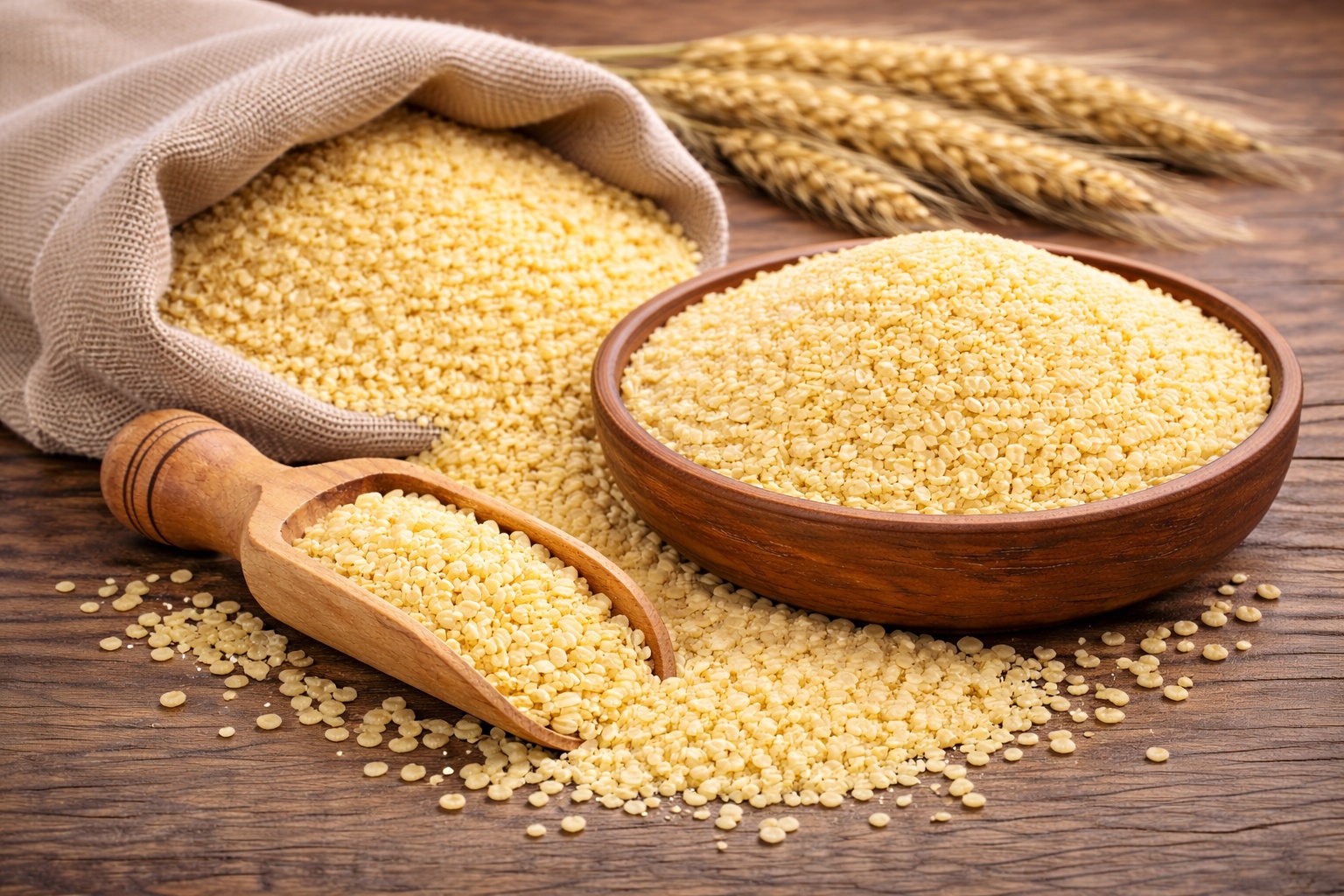
About Couscous
Couscous is traditionally made from crushed durum wheat semolina and is widely used in North African and Mediterranean cuisine.
It is popular for its light texture and ability to absorb flavors.
How Many Calories Are in Couscous?
Couscous contains around 112 calories per 100 grams (cooked), making it a moderate-calorie grain product.
Couscous Nutrition Facts (per 100g)
| Calories | 112 kcal |
| Protein | 3.8 g |
| Fat | 0.2 g |
| Carbohydrates | 23.2 g |
| Fiber | 1.4 g |
| Sugar | 0.1 g |
| Water | 72% |
Vitamins and Minerals
- Selenium - 27.5 µg
- Iron - 0.4 mg
- Magnesium - 8 mg
- Phosphorus - 22 mg
- Zinc - 0.3 mg
- Vitamin B3 - 1.4 mg
Health Benefits of Couscous
- Quick and easy to prepare
- Provides energy
- Low in fat
- Contains essential minerals
- Supports metabolism
- Versatile in many dishes
Calories in Different Portions
- 100g cooked couscous - 112 kcal
- 1 cup cooked couscous (157g) - ~176 kcal
- 1/2 cup cooked couscous (78g) - ~88 kcal
- 1 tablespoon cooked couscous (15g) - ~17 kcal
Popular Ways to Eat Couscous
- Salads
- Side dishes
- Stews
- Mediterranean recipes
- Grain bowls
- Healthy meal prep
Are Couscous Good for Weight Loss?
Couscous can be part of a weight loss diet when eaten in moderation, but whole grains may provide more fiber.
Additional Facts
- Made from semolina wheat
- Popular in North African cuisine
- Very quick cooking time
- Light and fluffy texture
Possible Downsides
Couscous contains gluten, so it is not suitable for people with celiac disease or gluten intolerance.
FAQ
Is couscous healthy?
Yes, couscous can be part of a balanced diet.
Does couscous contain gluten?
Yes, couscous is made from wheat and contains gluten.
Can I eat couscous every day?
Yes, in moderate portions couscous can be eaten regularly.