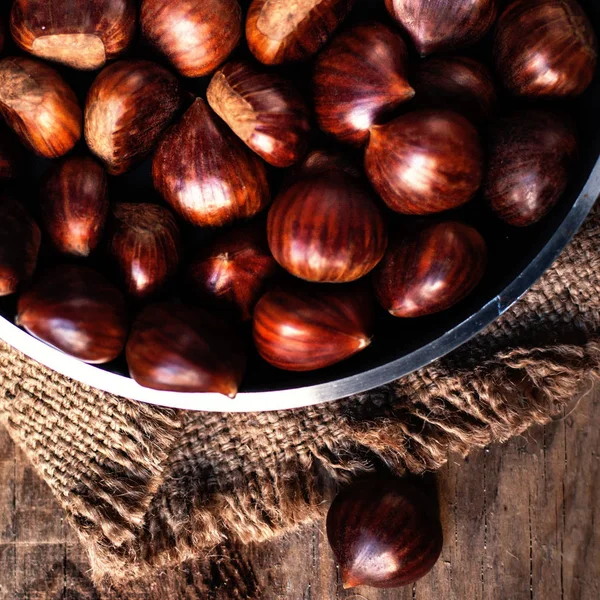
About Chestnuts
Chestnuts are soft, slightly sweet nuts often eaten roasted, especially during the fall and winter seasons.
Unlike most nuts, they are low in fat and rich in carbohydrates and fiber.
How Many Calories Are in Chestnuts?
Chestnuts contain around 213 calories per 100 grams, making them one of the lowest-calorie nuts.
Chestnuts Nutrition Facts (per 100g)
| Calories | 213 kcal |
| Protein | 2.4 g |
| Fat | 2.3 g |
| Carbohydrates | 45 g |
| Fiber | 8 g |
| Sugar | 10.6 g |
| Water | 52% |
Vitamins and Minerals
- Vitamin C - 26 mg
- Potassium - 518 mg
- Magnesium - 32 mg
- Phosphorus - 93 mg
- Iron - 0.9 mg
- Vitamin B6 - 0.4 mg
Health Benefits of Chestnuts
- Low in fat
- High in fiber
- Good source of energy
- Supports digestion
- Contains vitamin C
- Helps maintain heart health
Calories in Different Portions
- 100g chestnuts - 213 kcal
- 1 oz (28g) chestnuts - ~60 kcal
- 1 handful (30g) chestnuts - ~65 kcal
- 5 chestnuts - ~50 kcal
Popular Ways to Eat Chestnuts
- Roasted chestnuts
- Boiled chestnuts
- Chestnut puree
- Desserts
- Stuffing dishes
- Holiday recipes
Are Chestnuts Good for Weight Loss?
Yes. Chestnuts are lower in calories and fat compared to other nuts, making them a good option for weight loss.
Additional Facts
- Low-fat compared to other nuts
- Rich in carbohydrates
- Often eaten during holidays
- Soft texture when cooked
Possible Downsides
Chestnuts are high in carbohydrates and sugars compared to other nuts, which may not be ideal for low-carb diets.
FAQ
Are chestnuts healthy?
Yes, they are low in fat and rich in fiber and vitamin C.
How much protein is in chestnuts?
Chestnuts contain about 2.4g of protein per 100g.
Are chestnuts good for weight loss?
Yes, due to their lower calorie and fat content.