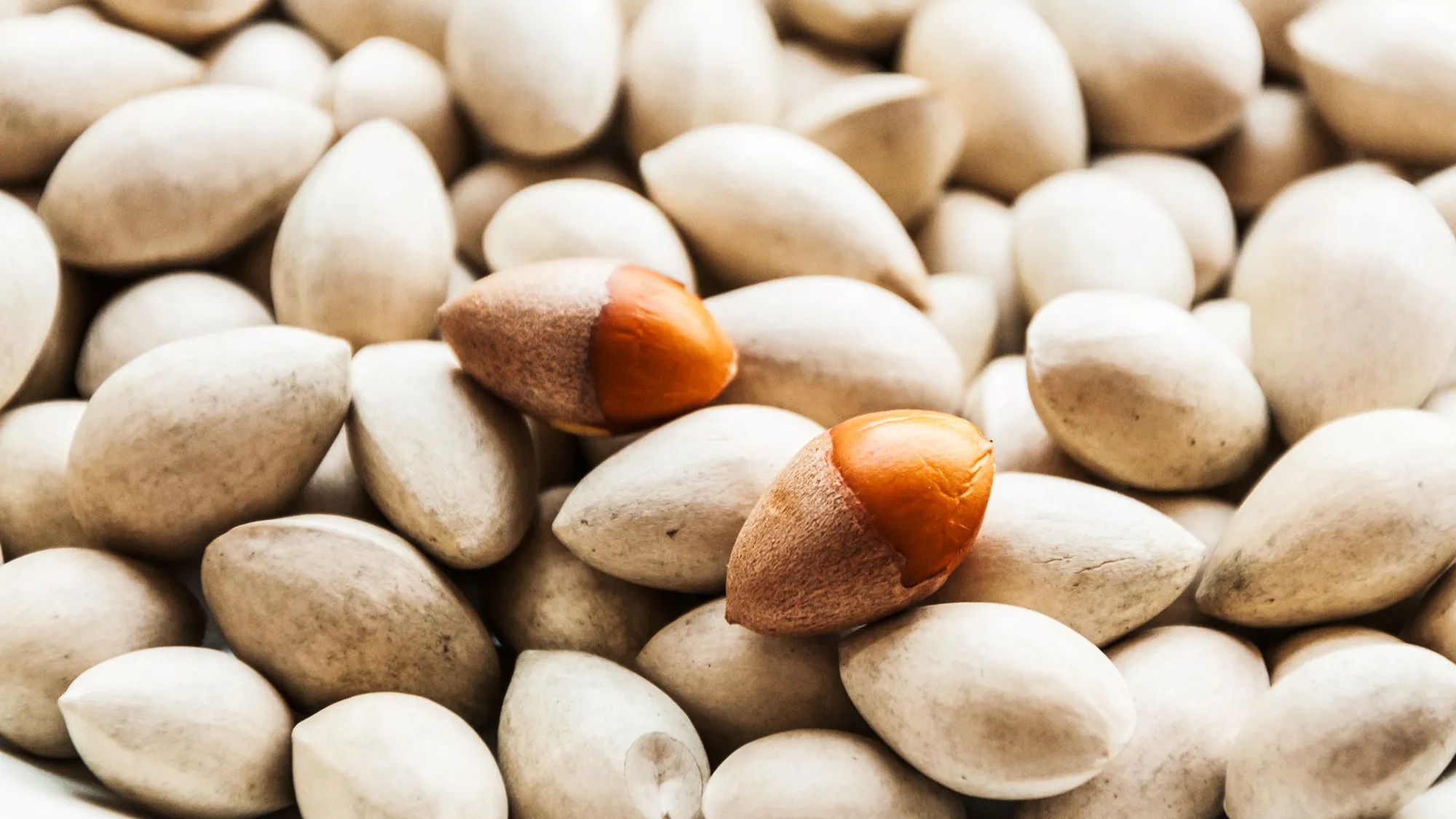
About Ginkgo Nuts
Ginkgo nuts come from the ancient ginkgo tree (Ginkgo biloba), one of the oldest tree species in the world.
They are commonly used in traditional Chinese, Japanese, and Korean dishes.
How Many Calories Are in Ginkgo Nuts?
Ginkgo nuts contain around 180–200 calories per 100 grams, making them a relatively moderate-energy food.
Ginkgo Nuts Nutrition Facts (per 100g)
| Calories | 190 kcal |
| Protein | 4 g |
| Fat | 2 g |
| Carbohydrates | 40 g |
| Fiber | 2 g |
| Sugar | 8 g |
| Water | 52% |
Vitamins and Minerals
- Potassium - 510 mg
- Magnesium - 40 mg
- Phosphorus - 120 mg
- Iron - 1 mg
- Vitamin C - 15 mg
- Vitamin B6 - 0.2 mg
Health Considerations
- Must be cooked before eating
- Consumed in small amounts
- Used mainly in traditional dishes
- Provides carbohydrates and energy
- Contains beneficial nutrients
- Part of cultural cuisine
Calories in Different Portions
- 100g ginkgo nuts - 190 kcal
- 1 oz (28g) - ~53 kcal
- Small serving (30g) - ~57 kcal
- 10 seeds - ~40 kcal
Popular Uses of Ginkgo Nuts
- Soups and broths
- Rice dishes
- Traditional Asian recipes
- Festive dishes
- Herbal cuisine
- Side ingredients
Are Ginkgo Nuts Healthy?
Ginkgo nuts can be part of a balanced diet when consumed in small, cooked portions, but they should not be eaten in large amounts.
Additional Facts
- Come from one of the oldest tree species
- Used in traditional medicine
- Popular in Asian cuisine
- Have a unique taste and texture
Possible Downsides
Raw or excessive consumption of ginkgo nuts can be toxic and may cause serious health issues. Always cook and consume in moderation.
FAQ
Can you eat ginkgo nuts raw?
No, they must be cooked before eating.
Are ginkgo nuts safe?
Yes, in small amounts when properly cooked.
What are ginkgo nuts used for?
Mainly in traditional Asian dishes and soups.