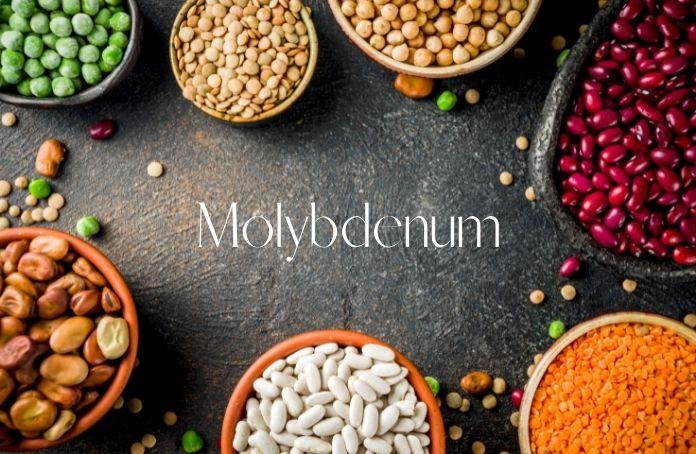
About Molybdenum
Molybdenum is a trace mineral needed in very small amounts by the body.
It helps activate enzymes that are involved in breaking down harmful substances.
Why Is Molybdenum Important?
Molybdenum supports detoxification processes, helps metabolize nutrients, and plays a role in maintaining healthy cells.
Benefits of Molybdenum
- Supports enzyme function
- Helps detoxify harmful compounds
- Supports metabolism
- Helps break down proteins
- Supports overall cellular health
Foods Rich in Molybdenum
- Lentils
- Beans
- Peas
- Whole grains
- Nuts
- Leafy greens
- Dairy products
Top 3 Foods Highest in Molybdenum
- Lentils – one of the best sources of molybdenum
- Beans – rich and common source
- Whole Grains – provide consistent intake
Molybdenum Daily Intake
| Group | Recommended Daily Intake |
| Adults | 45 mcg |
| Children | 17–43 mcg |
Molybdenum Deficiency Symptoms
- Very rare deficiency
- Metabolic problems
- Neurological issues (extreme cases)
Molybdenum Overdose Risks
- Joint pain (high intake)
- Gout-like symptoms
- Mineral imbalance
Molybdenum Supplements
Molybdenum supplements are rarely needed because most diets provide enough.
High intake from supplements should be avoided unless recommended by a doctor.
Related Vitamins and Minerals
FAQ
What happens if I don’t get enough molybdenum?
Deficiency is very rare, but may affect metabolism and enzyme function.
Can I get molybdenum from food only?
Yes, legumes, grains, and nuts provide enough for most people.
Is molybdenum important for detox?
Yes, it helps enzymes break down harmful compounds in the body.