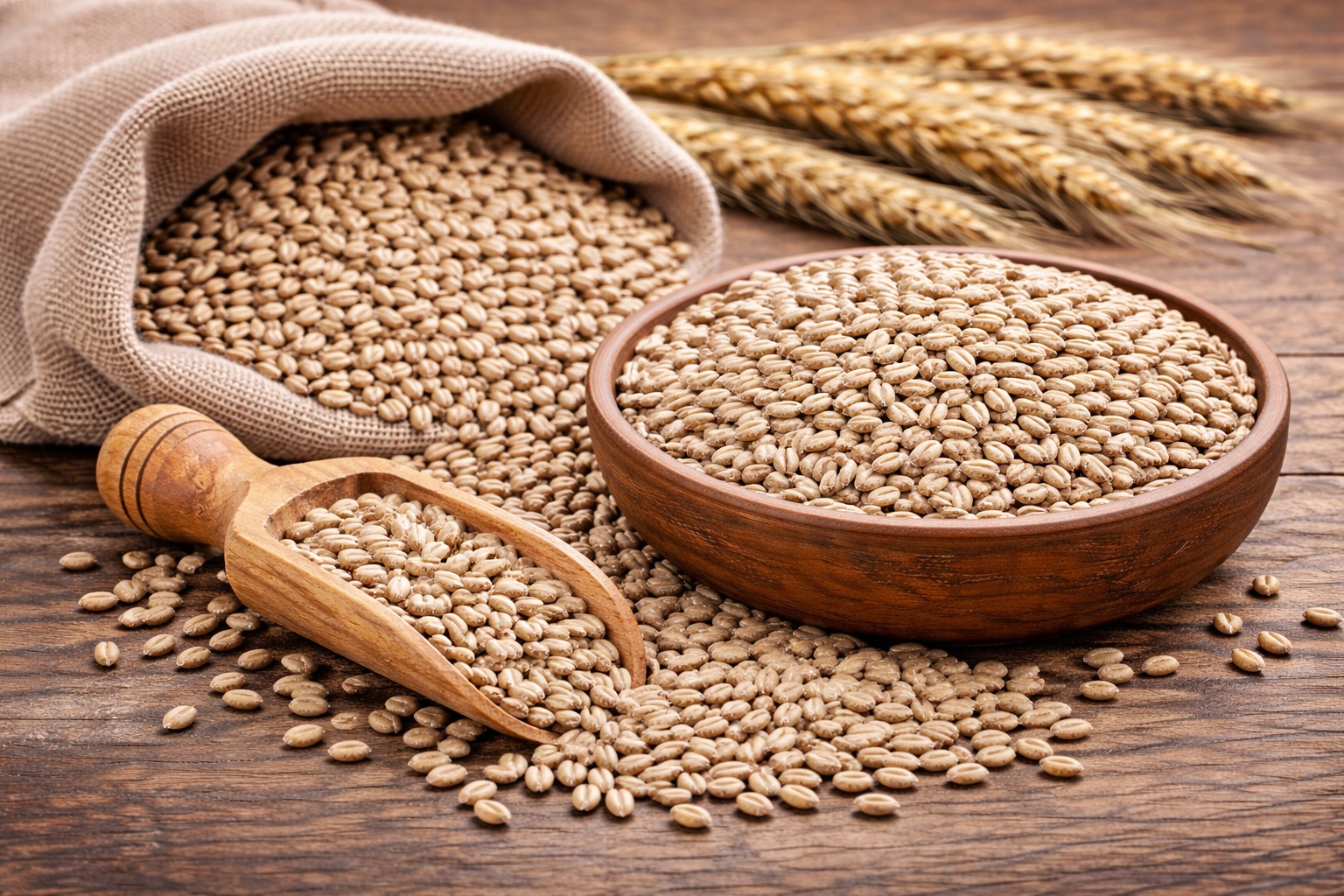
About Rye
Rye is a cereal grain closely related to wheat and barley. It is commonly used to make rye bread, crackers, and whiskey.
Whole rye is especially valued for its high fiber and nutrient content.
How Many Calories Are in Rye?
Rye contains around 120 calories per 100 grams (cooked), making it a nutritious and filling grain.
Rye Nutrition Facts (per 100g)
| Calories | 120 kcal |
| Protein | 3.3 g |
| Fat | 1.1 g |
| Carbohydrates | 25.5 g |
| Fiber | 4 g |
| Sugar | 0.3 g |
| Water | 67% |
Vitamins and Minerals
- Iron - 1.6 mg
- Magnesium - 35 mg
- Phosphorus - 100 mg
- Zinc - 1.1 mg
- Vitamin B3 - 3.2 mg
- Vitamin B1 - 0.15 mg
Health Benefits of Rye
- Very high in fiber
- Supports digestion
- Helps control blood sugar
- Supports heart health
- Keeps you full longer
- Rich in nutrients
Calories in Different Portions
- 100g cooked rye - 120 kcal
- 1 cup cooked rye (165g) - ~198 kcal
- 1/2 cup cooked rye (82g) - ~99 kcal
- 1 tablespoon cooked rye (15g) - ~18 kcal
Popular Ways to Eat Rye
- Rye bread
- Crackers
- Whole grain salads
- Breakfast cereals
- Side dishes
- Traditional recipes
Are Rye Good for Weight Loss?
Yes. Rye supports weight loss due to its high fiber content, which helps reduce hunger and improve satiety.
Additional Facts
- Closely related to wheat and barley
- Popular in European cuisine
- Has a distinctive, slightly sour flavor
- Whole rye is more nutritious than refined products
Possible Downsides
Rye contains gluten, so it is not suitable for people with celiac disease or gluten intolerance.
FAQ
Is rye healthy?
Yes, rye is very nutritious and rich in fiber.
Does rye contain gluten?
Yes, rye contains gluten.
Can I eat rye every day?
Yes, rye can be part of a balanced daily diet.