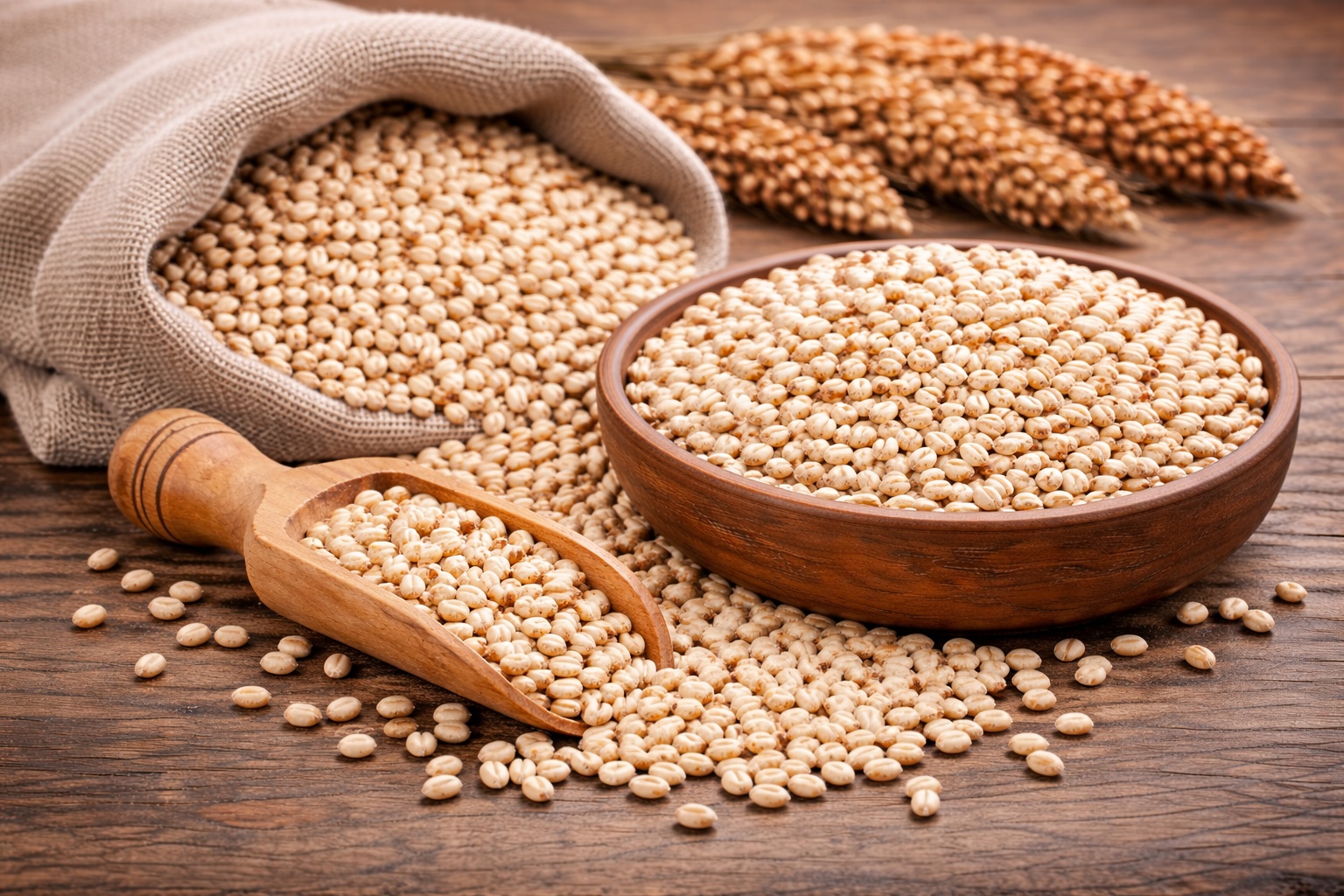
About Sorghum
Sorghum is an ancient cereal grain widely grown around the world, especially in Africa and Asia.
It is used in porridges, flatbreads, gluten-free baking, and even popped like popcorn.
How Many Calories Are in Sorghum?
Sorghum contains around 119 calories per 100 grams (cooked), making it a nutritious and energy-supporting grain.
Sorghum Nutrition Facts (per 100g)
| Calories | 119 kcal |
| Protein | 3.3 g |
| Fat | 1 g |
| Carbohydrates | 26.4 g |
| Fiber | 2.7 g |
| Sugar | 0.2 g |
| Water | 68% |
Vitamins and Minerals
- Iron - 1.1 mg
- Magnesium - 40 mg
- Phosphorus - 125 mg
- Zinc - 1 mg
- Potassium - 120 mg
- Vitamin B3 - 2.9 mg
Health Benefits of Sorghum
- Gluten-free grain
- Rich in antioxidants
- Supports heart health
- Helps control blood sugar
- Good source of fiber
- Provides long-lasting energy
Calories in Different Portions
- 100g cooked sorghum - 119 kcal
- 1 cup cooked sorghum (192g) - ~228 kcal
- 1/2 cup cooked sorghum (96g) - ~114 kcal
- 1 tablespoon cooked sorghum (15g) - ~18 kcal
Popular Ways to Eat Sorghum
- Porridge
- Grain bowls
- Salads
- Gluten-free baking
- Popped sorghum snacks
- Traditional recipes
Are Sorghum Good for Weight Loss?
Yes. Sorghum supports weight loss due to its fiber content and ability to keep you full longer.
Additional Facts
- Ancient grain grown worldwide
- Highly drought-resistant crop
- Used in both food and beverages
- Gluten-free and versatile
Possible Downsides
Sorghum is generally safe, but some varieties contain compounds that may reduce mineral absorption if consumed in very large amounts.
FAQ
Is sorghum healthy?
Yes, sorghum is a nutritious and antioxidant-rich grain.
Is sorghum gluten-free?
Yes, sorghum does not contain gluten.
Can I eat sorghum every day?
Yes, sorghum can be part of a healthy daily diet.