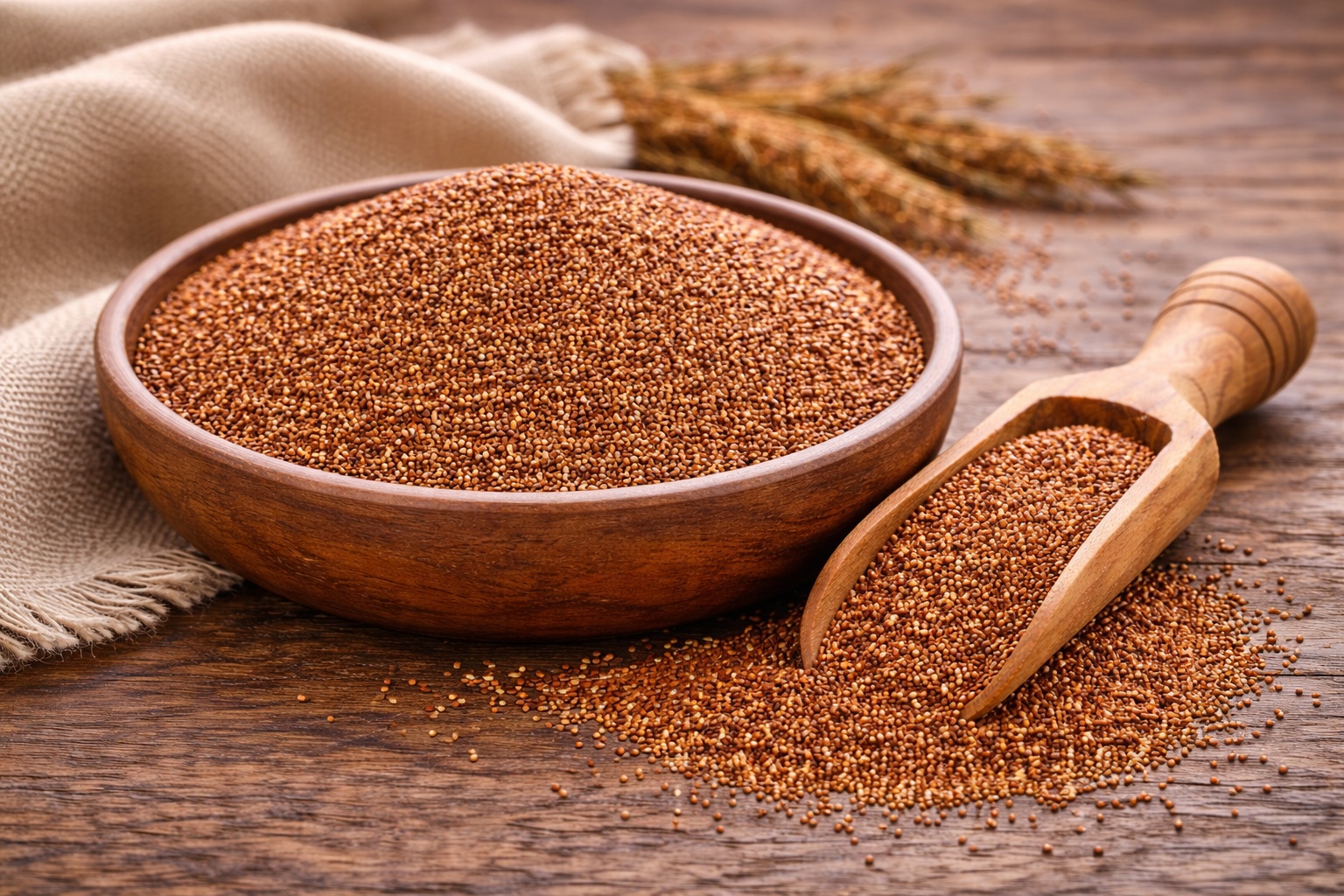
About Teff
Teff is one of the smallest grains in the world and has been a staple in Ethiopian cuisine for thousands of years.
It is commonly used to make injera and is valued for its nutrient density.
How Many Calories Are in Teff?
Teff contains around 101 calories per 100 grams (cooked), making it a light but highly nutritious grain.
Teff Nutrition Facts (per 100g)
| Calories | 101 kcal |
| Protein | 3.9 g |
| Fat | 0.7 g |
| Carbohydrates | 20.7 g |
| Fiber | 2.8 g |
| Sugar | 0.3 g |
| Water | 74% |
Vitamins and Minerals
- Iron - 2.7 mg
- Calcium - 49 mg
- Magnesium - 50 mg
- Phosphorus - 127 mg
- Potassium - 123 mg
- Vitamin B1 - 0.1 mg
Health Benefits of Teff
- Gluten-free grain
- Rich in iron and calcium
- Supports bone health
- Helps improve digestion
- Provides steady energy
- Good for heart health
Calories in Different Portions
- 100g cooked teff - 101 kcal
- 1 cup cooked teff (252g) - ~255 kcal
- 1/2 cup cooked teff (126g) - ~128 kcal
- 1 tablespoon cooked teff (15g) - ~15 kcal
Popular Ways to Eat Teff
- Injera (Ethiopian flatbread)
- Porridge
- Grain bowls
- Gluten-free baking
- Side dishes
- Healthy recipes
Are Teff Good for Weight Loss?
Yes. Teff supports weight loss due to its fiber content and ability to keep you full for longer.
Additional Facts
- One of the smallest grains in the world
- Staple in Ethiopian cuisine
- Highly nutrient-dense
- Gluten-free and easy to digest
Possible Downsides
Teff is generally safe, but its availability may be limited in some regions and it can be more expensive than common grains.
FAQ
Is teff healthy?
Yes, teff is a highly nutritious and mineral-rich grain.
Is teff gluten-free?
Yes, teff does not contain gluten.
Can I eat teff every day?
Yes, teff can be included in a healthy daily diet.