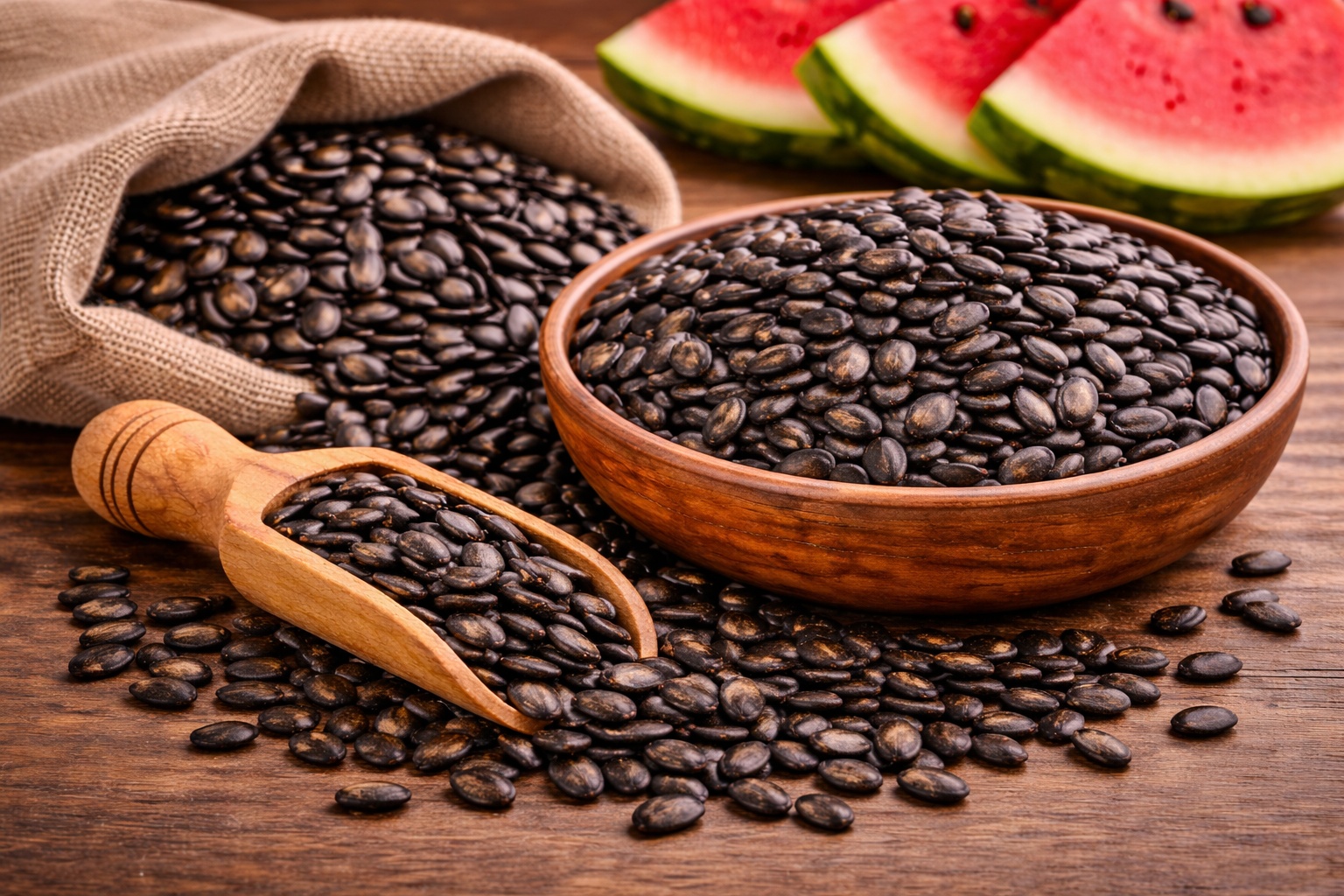
About Watermelon Seeds
Watermelon seeds are often discarded but can be roasted and eaten as a healthy and crunchy snack.
They are increasingly popular as a nutrient-rich alternative to other seeds.
How Many Calories Are in Watermelon Seeds?
Watermelon seeds contain around 557 calories per 100 grams, making them a high-energy and nutrient-dense food.
Watermelon Seeds Nutrition Facts (per 100g)
| Calories | 557 kcal |
| Protein | 28 g |
| Fat | 47 g |
| Carbohydrates | 15 g |
| Fiber | 4 g |
| Sugar | 0.4 g |
| Water | 5% |
Vitamins and Minerals
- Magnesium - 515 mg
- Phosphorus - 755 mg
- Iron - 7.3 mg
- Zinc - 10 mg
- Potassium - 650 mg
- Vitamin B3 - 3.5 mg
Health Benefits of Watermelon Seeds
- High in protein
- Rich in healthy fats
- Supports muscle growth
- Supports heart health
- Provides essential minerals
- Supports energy production
Calories in Different Portions
- 100g watermelon seeds - 557 kcal
- 1 tablespoon watermelon seeds (10g) - ~56 kcal
- 2 tablespoons watermelon seeds (20g) - ~111 kcal
- 1 handful watermelon seeds (30g) - ~167 kcal
Popular Ways to Eat Watermelon Seeds
- Roasted as a snack
- In salads
- In trail mix
- With yogurt
- In granola
- Healthy recipes
Are Watermelon Seeds Good for Weight Loss?
Watermelon seeds can support weight loss when eaten in moderation, as they are filling but high in calories.
Additional Facts
- Often roasted before eating
- Rich in plant protein
- Crunchy texture
- Highly nutritious snack
Possible Downsides
Watermelon seeds are high in calories and may be salted when roasted, so they should be consumed in moderation.
FAQ
Are watermelon seeds healthy?
Yes, they are rich in protein and minerals.
Can you eat watermelon seeds?
Yes, especially when roasted.
Can I eat watermelon seeds every day?
Yes, but in moderate amounts.