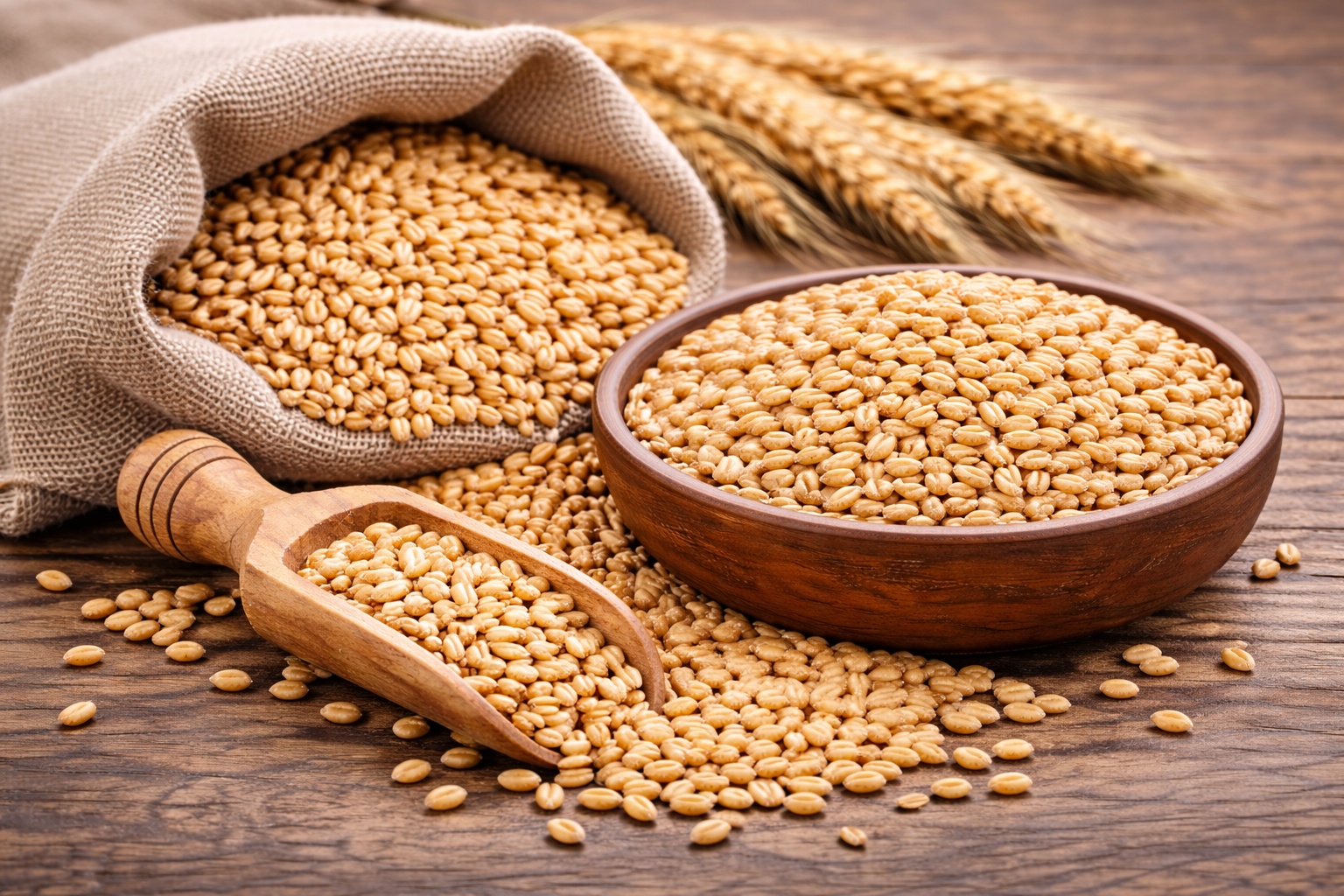
About Wheat
Wheat is a staple grain used to make bread, pasta, cereals, and many other foods. It has been cultivated for thousands of years and remains a key part of global diets.
Whole wheat is especially valued for its fiber and nutrient content.
How Many Calories Are in Wheat?
Wheat contains around 123 calories per 100 grams (cooked), making it a nutrient-dense and energy-providing food.
Wheat Nutrition Facts (per 100g)
| Calories | 123 kcal |
| Protein | 4.5 g |
| Fat | 0.6 g |
| Carbohydrates | 25 g |
| Fiber | 3.8 g |
| Sugar | 0.4 g |
| Water | 65% |
Vitamins and Minerals
- Iron - 1.5 mg
- Magnesium - 40 mg
- Phosphorus - 120 mg
- Zinc - 1 mg
- Vitamin B3 - 3.5 mg
- Vitamin B1 - 0.1 mg
Health Benefits of Wheat
- Provides long-lasting energy
- Rich in fiber (whole wheat)
- Supports digestion
- Good source of plant protein
- Contains essential nutrients
- Supports overall health
Calories in Different Portions
- 100g cooked wheat - 123 kcal
- 1 cup cooked wheat (180g) - ~220 kcal
- 1/2 cup cooked wheat (90g) - ~110 kcal
- 1 tablespoon cooked wheat (15g) - ~18 kcal
Popular Ways to Eat Wheat
- Bread
- Pasta
- Cereals
- Whole grain salads
- Baked goods
- Side dishes
Are Wheat Good for Weight Loss?
Whole wheat can support weight loss due to its fiber content, which helps you feel full and reduces overeating.
Additional Facts
- One of the most important staple crops worldwide
- Used in many everyday foods
- Whole wheat is more nutritious than refined wheat
- Provides essential energy for the body
Possible Downsides
Wheat contains gluten, so it is not suitable for people with celiac disease or gluten intolerance.
FAQ
Is wheat healthy?
Yes, especially whole wheat, which is rich in fiber and nutrients.
Does wheat contain gluten?
Yes, wheat contains gluten.
Can I eat wheat every day?
Yes, wheat can be part of a balanced daily diet.