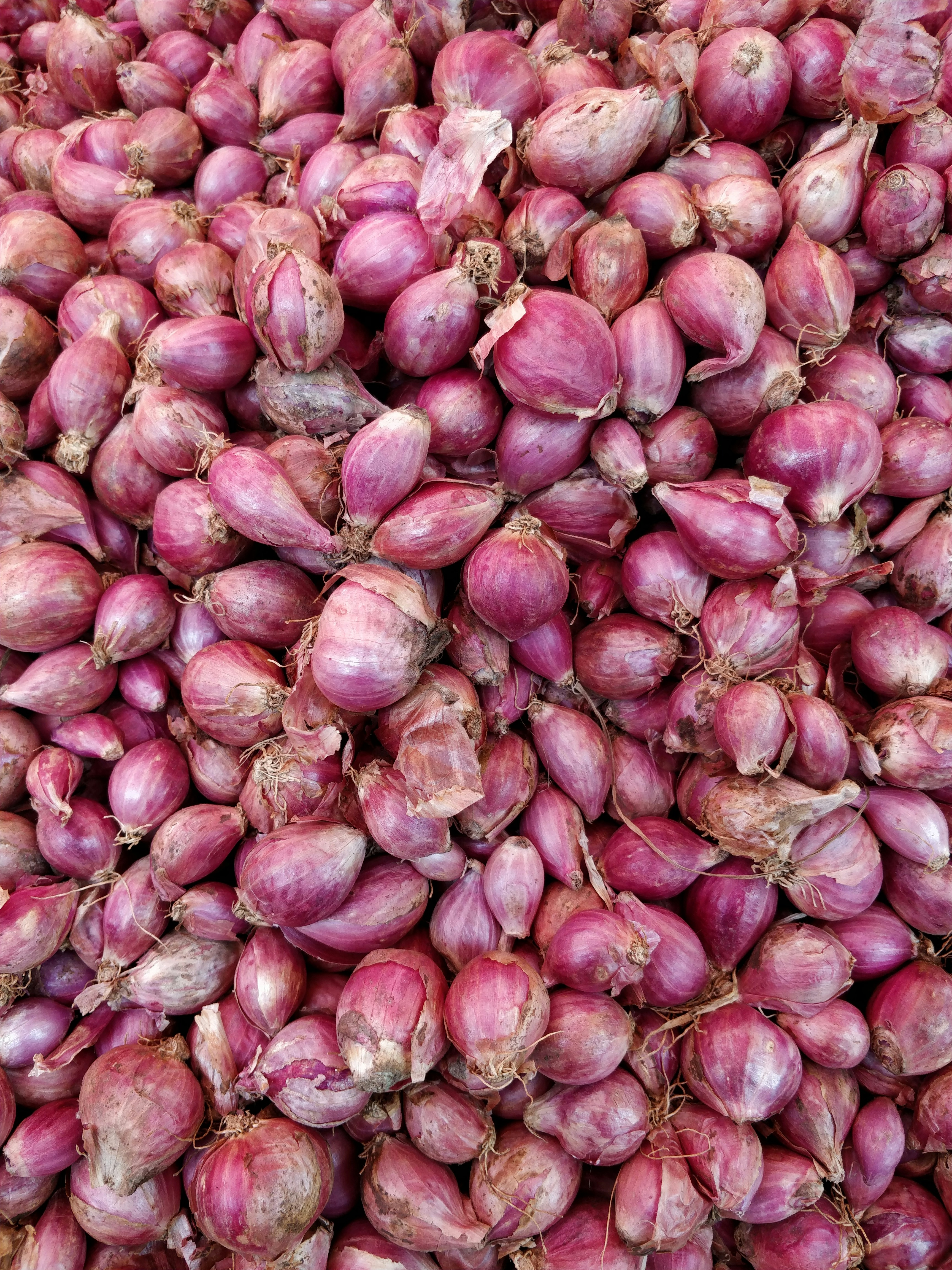
About Shallots
Shallots belong to the allium family, which includes onions, garlic, and leeks. They have a milder and slightly sweeter flavor compared to onions.
Shallots are widely used in sauces, salads, and gourmet dishes.
How Many Calories Are in Shallots?
Shallots contain about 72 calories per 100 grams, which is higher than many vegetables due to their natural sugar content.
Shallot Nutrition Facts (per 100g)
| Calories | 72 kcal |
| Protein | 2.5 g |
| Fat | 0.1 g |
| Carbohydrates | 16.8 g |
| Fiber | 3.2 g |
| Sugar | 7.9 g |
| Water | 80% |
Vitamins and Minerals
Health Benefits of Shallots
- Rich in antioxidants
- Supports heart health
- Supports immune system
- May help regulate blood sugar
- Supports digestion
Calories in Different Portions
- 100g shallot - 72 kcal
- 1 small shallot - about 20 kcal
- 1 tablespoon chopped - about 7 kcal
- 1 ounce shallot - about 20 kcal
Popular Shallot Dishes
- Shallot sauce
- Caramelized shallots
- Salads with shallots
- Roasted vegetables with shallots
- French cuisine dishes
Are Shallots Good for Weight Loss?
Shallots can be part of a healthy diet, but due to their higher carbohydrate content, they should be consumed in moderation in low-calorie diets.
Additional Facts
- Shallots are related to onions and garlic.
- They have a milder, sweeter flavor.
- Common in gourmet cooking.
- Rich in plant compounds and antioxidants.
Possible Downsides
Shallots may cause digestive discomfort in some people when eaten in large amounts, similar to onions and garlic.
FAQ
How many calories are in shallots?
About 72 kcal per 100g.
Are shallots healthier than onions?
Both are healthy, but shallots contain slightly more antioxidants.
Can shallots be eaten raw?
Yes, they are often used raw in salads and dressings.