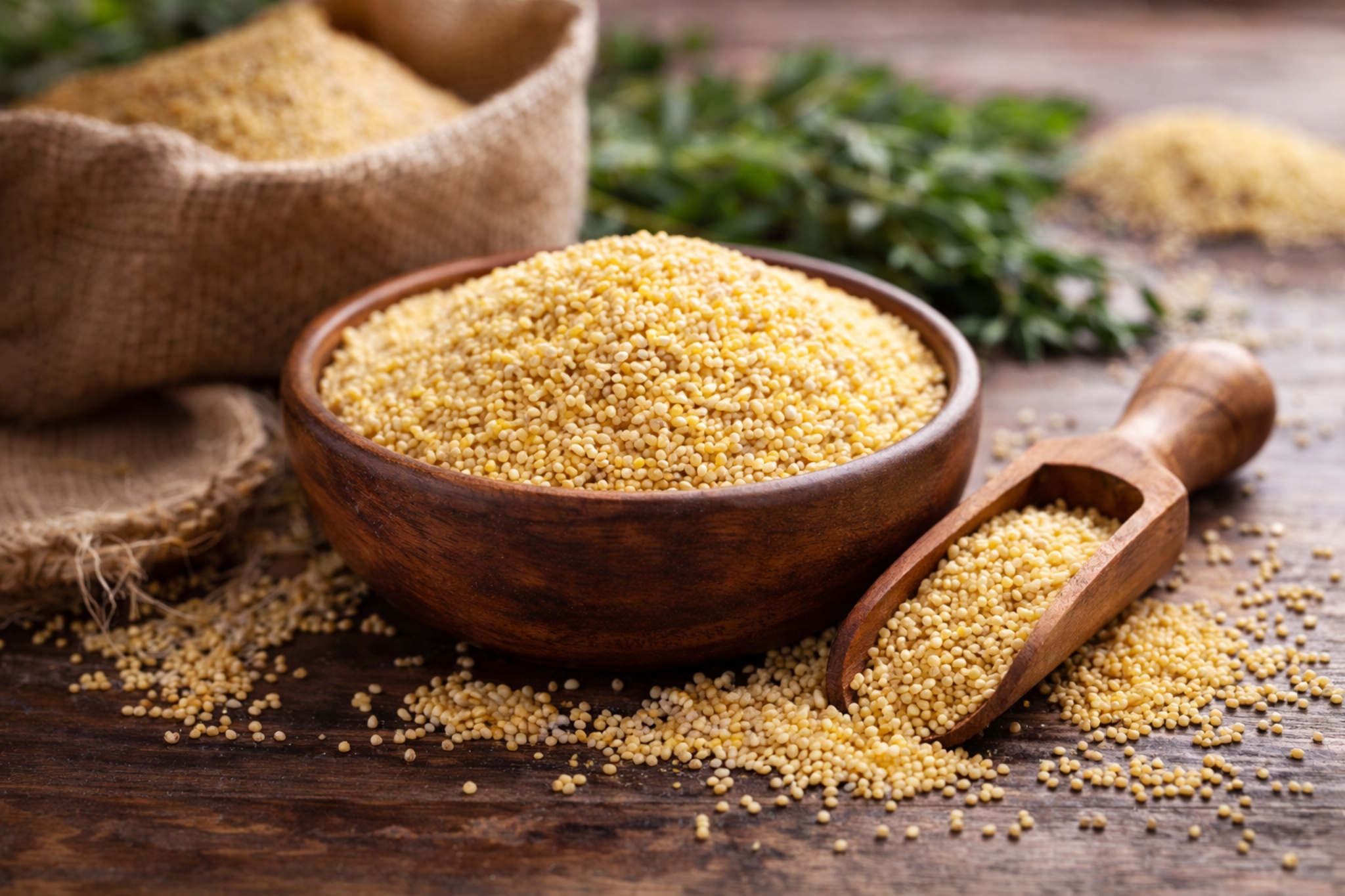
About Millet
Millet is one of the oldest cultivated grains and is widely consumed in Asia and Africa as a staple food.
It is naturally gluten-free and rich in essential nutrients.
How Many Calories Are in Millet?
Millet contains around 119 calories per 100 grams (cooked), making it a light and nutritious grain.
Millet Nutrition Facts (per 100g)
| Calories | 119 kcal |
| Protein | 3.5 g |
| Fat | 1 g |
| Carbohydrates | 23.7 g |
| Fiber | 1.3 g |
| Sugar | 0.1 g |
| Water | 71% |
Vitamins and Minerals
- Magnesium - 44 mg
- Phosphorus - 100 mg
- Iron - 0.6 mg
- Potassium - 62 mg
- Zinc - 0.9 mg
- Vitamin B1 - 0.1 mg
Health Benefits of Millet
- Gluten-free grain
- Easy to digest
- Supports heart health
- Helps control blood sugar
- Rich in antioxidants
- Good for weight management
Calories in Different Portions
- 100g cooked millet - 119 kcal
- 1 cup cooked millet (174g) - ~207 kcal
- 1/2 cup cooked millet (87g) - ~104 kcal
- 1 tablespoon cooked millet (15g) - ~18 kcal
Popular Ways to Eat Millet
- Millet porridge
- Grain bowls
- Salads
- Side dishes
- Gluten-free baking
- Healthy recipes
Are Millet Good for Weight Loss?
Yes. Millet can support weight loss due to its fiber content and ability to keep you full for longer.
Additional Facts
- One of the oldest cultivated grains
- Popular in many traditional diets
- Gluten-free and easy to cook
- Highly versatile in recipes
Possible Downsides
Millet is generally safe, but excessive consumption may interfere with thyroid function in rare cases.
FAQ
Is millet healthy?
Yes, millet is a nutritious and gluten-free grain.
Is millet gluten-free?
Yes, millet does not contain gluten.
Can I eat millet every day?
Yes, millet can be part of a healthy daily diet.